
The global model aircraft and small unmanned helicopter industry is in a cycle of rapid expansion and technological upgrading.
As a core aerial platform integrating recreational competition, industrial application, and education and training attributes, the key bottlenecks of radio-controlled (RC) helicopters in flight performance, control precision, and endurance are concentrated in the technical level of the main power system.
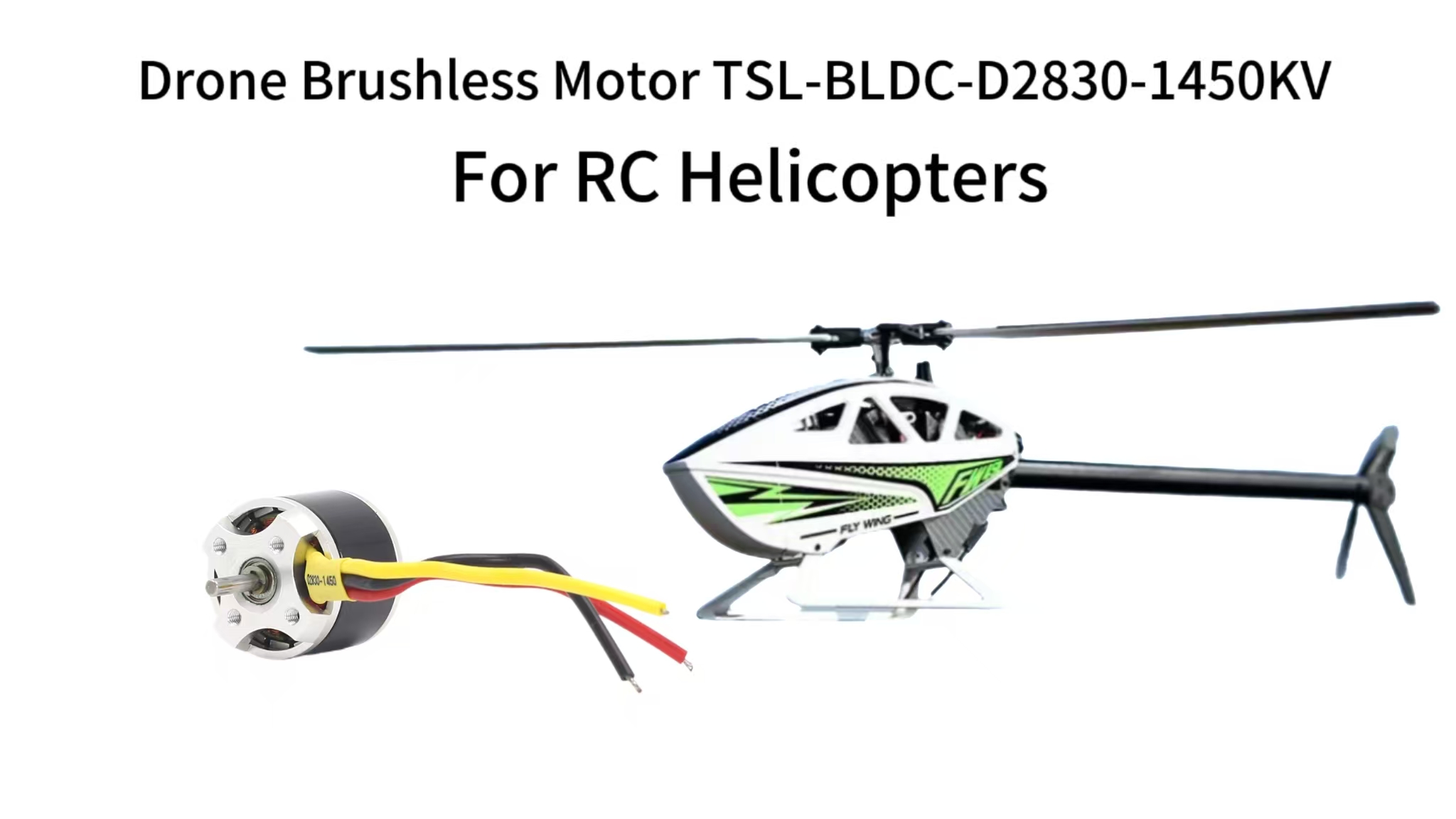
As a professional developer and mass manufacturer of DC brushless motors, we have developed the TSL-BLDC-D2830-1450KV outrunner brushless DC motor targeting RC helicopters.
It provides a highly reliable, cost-effective, and fully scene-adaptable standardized main power solution for global RC helicopter manufacturers and industrial application integrators.
Overview of Radio-Controlled Helicopters
An RC helicopter is a rotor-type aerial platform that achieves full-attitude closed-loop control through a wireless remote control link and flight control system.
It mainly consists of a fuselage frame, main rotor system, tail rotor system, flight control gyroscope, power unit, and servo actuators. It can perform complex flight actions such as stable hovering, vertical takeoff and landing, omnidirectional maneuvering, inverted flight, and stunt flying.
According to application scenarios, RC helicopters can be divided into consumer-grade recreational models, competition-grade model aircraft, industrial-grade small unmanned helicopters, and education and training-grade models.
They are widely used in model aircraft sports, low-altitude aerial photography, power inspection, emergency reconnaissance, agricultural plant protection, aviation science popularization, and other fields.
Their core flight capabilities highly depend on the output characteristics of the main power system. The performance of the power motor directly determines the maximum payload, endurance, flight stability, and maneuverability limit of the aircraft.
Composition and Functional Division of the Motor System for RC Helicopters
The motor system of an RC helicopter is divided into two core units with clear division of labor and collaborative operation, jointly ensuring the controllability and stability of flight.
Servo (Servo Actuator Motor)
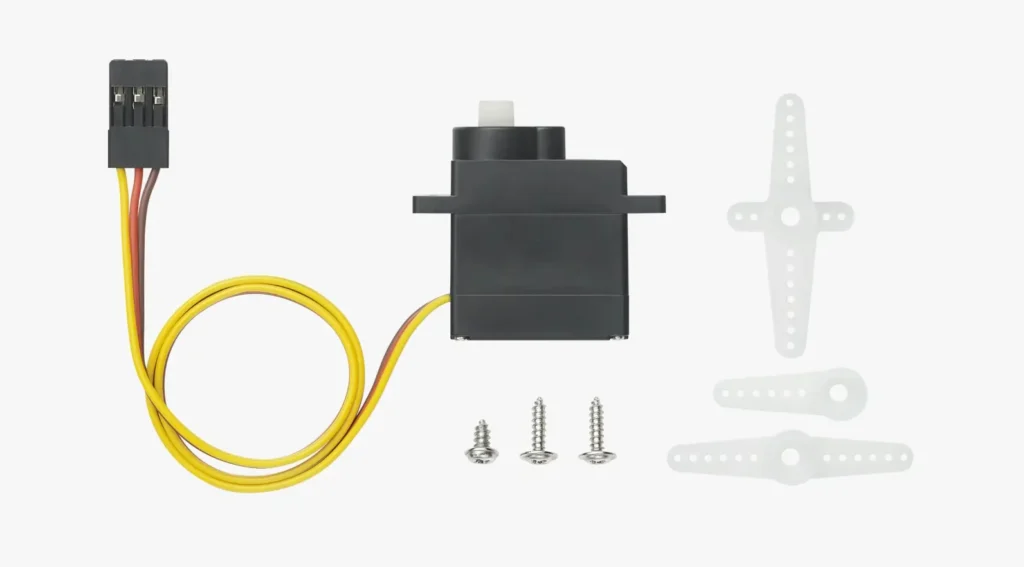
The servo is the attitude control execution unit of the RC helicopter. Its core function is to receive closed-loop commands from the flight control system, adjust the main rotor collective/cyclic pitch and tail rotor pitch/rotational speed, and realize heading correction, attitude fine-tuning, and flight trajectory control of the helicopter.
Outrunner Brushless DC Motor
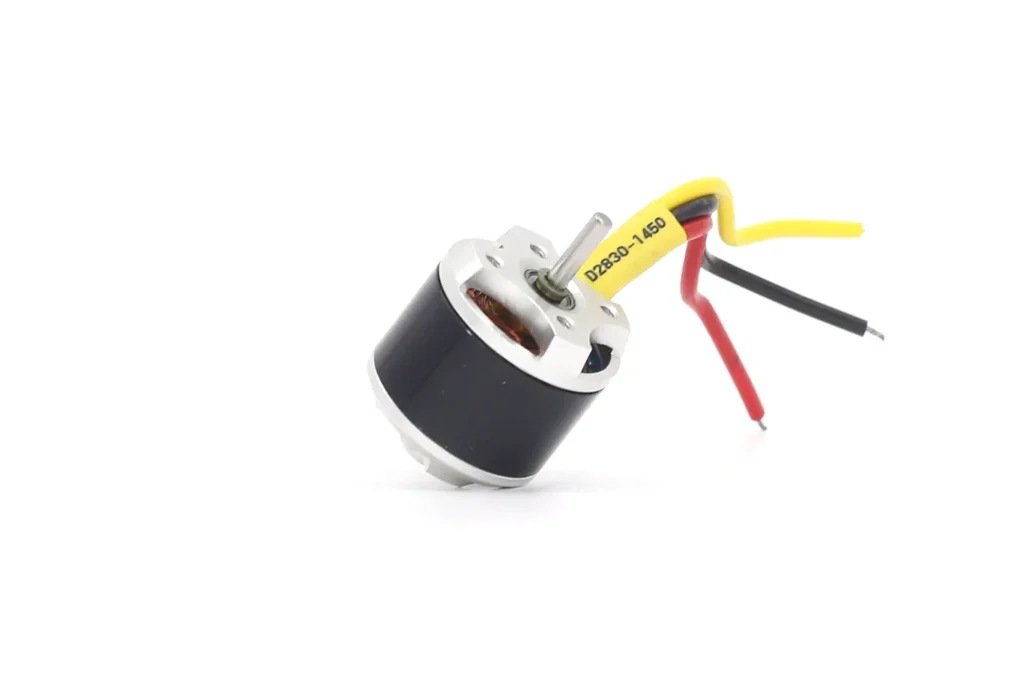
The outrunner brushless DC motor is the main power core of the RC helicopter. Its core function is to drive the main rotor (and the tail rotor synchronously in some models) to rotate at high speed, convert electrical energy into mechanical energy, and provide lift and omnidirectional flight power for the helicopter.
Core Advantages of Outrunner Brushless DC Motors
Outrunner brushless DC motors have become the mainstream solution for the main power of mid-to-high-end RC helicopters. Their rotors are directly coaxially connected to the rotor load, and the torque output characteristics are highly compatible with the low-speed and high-torque driving requirements of the main rotor. They have irreplaceable scene adaptation advantages compared with other types of motors.
Comparison with Brushed DC Motors
Brushed motors rely on carbon brush-commutator mechanical commutation, which generates commutation sparks and strong electromagnetic interference, seriously affecting the stability of flight control and remote control signals.
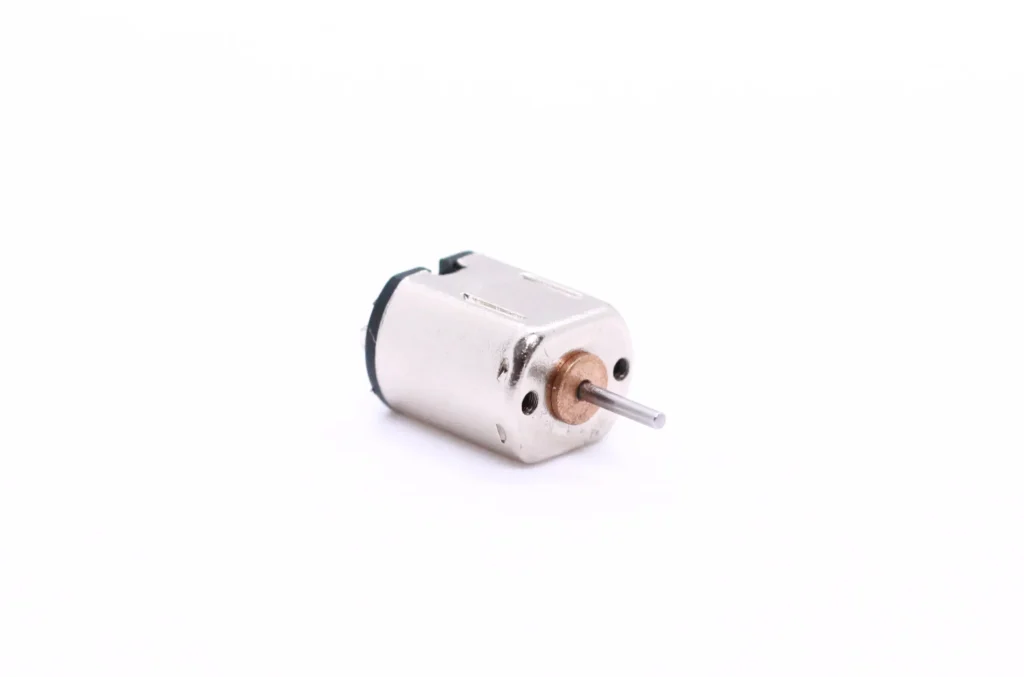
Carbon brushes are prone to wear, short service life, and require frequent maintenance; they have low operating efficiency and severe heat generation, and are only suitable for low-end toy-grade RC helicopters, failing to meet the long-term stable operation requirements of mid-to-high-end models.
Comparison with Coreless Motors
Coreless motors have an ironless structure, low moment of inertia, and fast response, but extremely low torque density and poor overload capacity. Permanent magnets are prone to demagnetization during long-term high-load operation, and efficiency drops rapidly with increasing load.
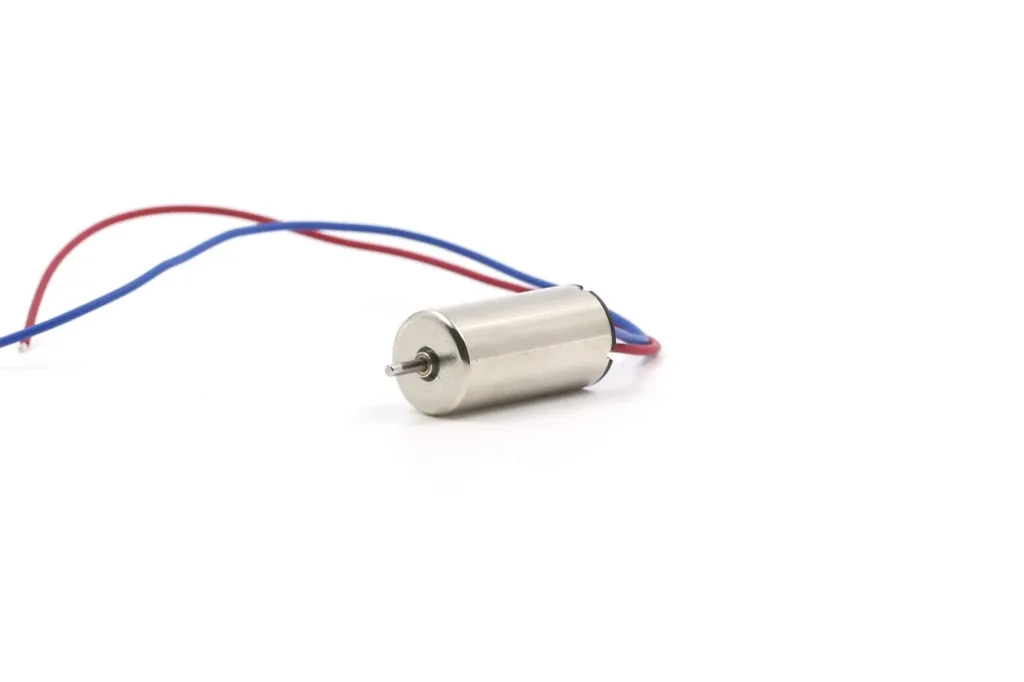
They are only suitable for micro and ultra-light RC helicopters, unable to support the payload and power requirements of medium and larger models.
Comparison with Ordinary Inrunner Brushless Motors
Inrunner brushless motors have excellent high-speed characteristics but weak low-speed torque output. They need to be equipped with a reduction gearbox to drive the rotor, increasing structural complexity, overall weight, and transmission loss.
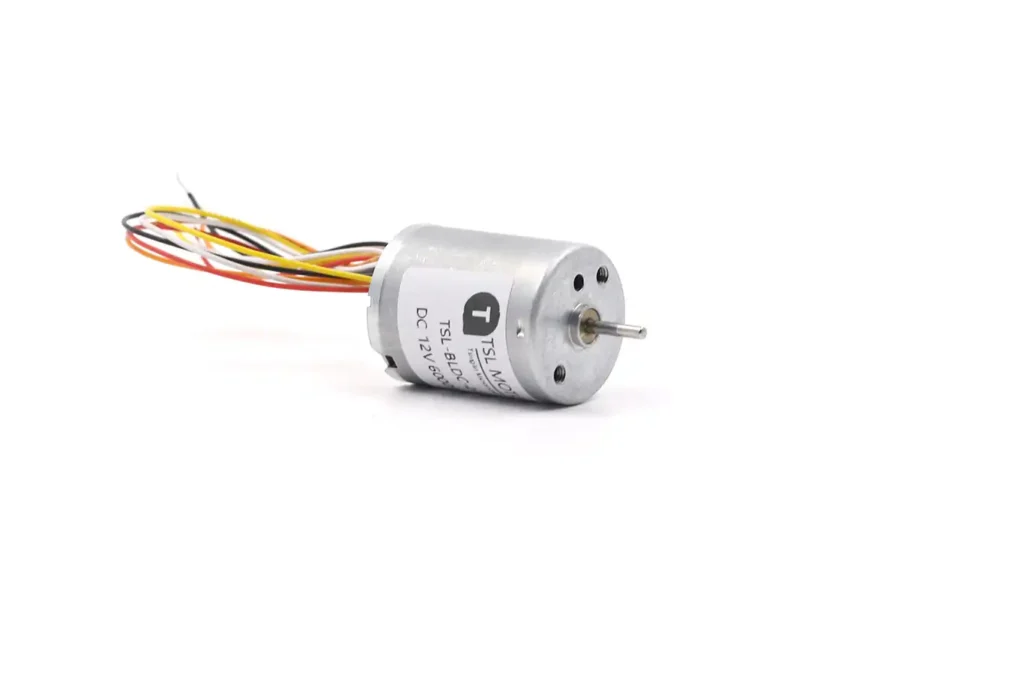
The torque density is lower than that of outrunner motors under the same specification, and the heat dissipation performance is poor, making them unable to adapt to the direct drive working conditions of the main rotor.
| Comparison Dimensions | Brushed DC Motor | Coreless Motor | Ordinary Inrunner Brushless Motor | Outrunner Brushless DC Motor |
| Torque Density | Low | Extremely Low | Medium | High |
| Conversion Efficiency | Low | Medium-High (Light Load) | Medium | High (Full Working Conditions) |
| Low-Speed Stability | Poor | Average | Average | Excellent |
| Operating Vibration & EMI | High Vibration, Strong EMI | Medium Vibration | Medium Vibration | Ultra-Low Vibration, Low EMI |
| Service Life | Short (Carbon Brushes Wear Easily) | Medium (Prone to Demagnetization) | Medium | Extra-Long (No Mechanical Wear) |
| Overload Capacity | Weak | Extremely Weak | Medium | Strong |
| Maintenance Cost | High | Medium | Low | Ultra-Low (Maintenance-Free) |
| RC Helicopter Adaptability | Only for Low-End Toy Models | Only for Micro & Ultra-Light Models | Average Adaptability | Optimal Adaptation |
| Comparison Dimensions | Brushed DC Motor | Coreless Motor | Ordinary Inrunner Brushless Motor | Outrunner Brushless DC Motor |
Core Technical Advantages of TSL-BLDC-D2830-1450KV Outrunner Brushless Motor
TSL-BLDC-D2830-1450KV is a dedicated outrunner brushless motor developed specifically for the main rotor drive of 450-class RC helicopters, with comprehensive special optimization for the flight conditions of RC helicopters.
High Torque Density Output
Adopting a 12N7P (12 stator poles/7 rotor poles) concentrated winding structure, matched with high-grade neodymium-iron-boron permanent magnets and optimized magnetic circuit design, it achieves a maximum continuous output power of 250W and a maximum continuous current of 22A with a lightweight 54g fuselage.
The torque output far exceeds other types of motors of the same specification, stably driving the main rotor of 450-class RC helicopters, and perfectly covering the power requirements of hovering, cruising, and stunt maneuvering under all working conditions.
High Conversion Efficiency Under Full Working Conditions
Using low-loss cold-rolled silicon steel stator cores, high-purity oxygen-free copper windings, and precise air gap design, the motor conversion efficiency is ≥90% in the common operating range, greatly reducing power loss and operating heat.
Under the same battery capacity, flight duration can be increased by 15%-20%, effectively solving the endurance pain point in the RC helicopter industry.
Ultra-Low Cogging Effect
The no-load and full-load operating vibration of the motor is reduced to an industry-leading level, effectively reducing fuselage jitter, improving flight control precision and aerial photography load imaging quality, and significantly reducing operating noise.
Precise KV Value Matching
The speed constant of 1450rpm/V is optimized for special working conditions, perfectly adapting to the mainstream 3S-4S model aircraft lithium battery platforms.
The throttle command response delay is <50ms, with excellent speed linearity, no jamming or lag from idle to full throttle, delicate and precise control feel, and full support for all flight modes such as stunt flying, precise hovering, and route flight.
Extra-Long Service Life
Adopting a high-precision double-ball bearing support structure, Class F high-temperature resistant insulated windings, and a fully enclosed dustproof fuselage. Brushless electronic commutation eliminates mechanical wear.
It can operate stably in a wide temperature range of -20℃~60℃, with a non-failure continuous operation time ≥1000 hours, maintenance-free throughout the process, adapting to the stringent requirements of high-frequency commercial and competition scenarios.
Standardization
Adopting industry‑standard mounting holes, a 3 mm standard output‑shaft diameter, and a standardized three‑phase outlet interface, it can directly fit mainstream 450‑class RC helicopter frames, model‑aircraft brushless ESCs, and flight‑control systems without any additional structural modification.
This greatly shortens the development cycle for complete‑machine manufacturers and reduces the adaptation cost in mass production.
Overview of TSL-BLDC-D2830-1450KV Outrunner Brushless Motor
TSL‑BLDC‑D2830‑1450KV is an outrunner brushless DC motor designed specifically for the main‑rotor drive of 450‑class RC helicopters. It features industry‑standard mounting interfaces and a standardized three‑phase outlet, enabling quick compatibility with mainstream RC helicopter frames, ESCs, and flight‑control systems.
Its performance fully meets the power demands of RC helicopters across all operating conditions, including hovering, cruising, and stunt maneuvers.
Customized Services and Technical Support System
For global RC helicopter manufacturers, model‑aircraft brands, and industrial application integrators, we provide a full‑process, one‑stop customized solution.Our support covers product selection, scheme design, prototype development, testing and verification, and large‑scale mass production throughout the entire life cycle.
- Core Parameter Customization: Core electrical parameters such as motor KV value, torque characteristics, rated power, and speed range can be customized according to the payload, rotor size, endurance requirements, and operating voltage of the customer’s aircraft.
- Structural Customized Development: Support personalized structural customization of output shaft specifications, mounting holes, outlet methods, terminal types, waterproof and dustproof levels, heat dissipation structures, etc.
- Special Performance Optimization: Conduct special optimization on the motor’s low-speed stability, vibration suppression, efficiency curve, overload capacity, high and low temperature adaptability, etc., according to the customer’s specific needs to improve the core performance of the complete machine.
- Environmental Adaptability Enhancement: Upgrade materials, strengthen protection structures, and optimize insulation performance for special application environments such as high altitude, high humidity, salt spray, and high and low temperatures.
We provide one-on-one technical support throughout the process from early scheme selection, structural adaptation, prototype testing to batch delivery, after-sales maintenance, and product iteration, helping customers quickly launch RC helicopter products with core competitiveness.
Conclusion
With core advantages such as high torque density, high efficiency across all operating conditions, low vibration, high stability, fast dynamic response, high reliability, long service life, and easy integration, the TSL‑BLDC‑D2830‑1450KV outrunner brushless DC motor delivers an excellent match for the full‑condition power demands of 450‑class RC helicopter main rotors.
This motor addresses the long‑standing limitations of traditional brushed motors, coreless motors, and standard inrunner brushless motors in torque output, efficiency, durability, reliability, and structural adaptability. It provides a mature, reliable, mass‑producible, and cost‑effective dedicated power solution for consumer‑grade model aircraft, competition‑grade RC helicopters, and industrial small unmanned helicopter manufacturers worldwide.
Looking ahead, we will continue to focus on technological innovation and product iteration in RC helicopter power systems. We will keep optimizing performance, strengthening customized service capabilities, and helping global customers enhance their core product competitiveness—promoting the wider adoption of high‑performance RC helicopters across diverse application fields.
FAQ
Q1:Which RC helicopter class is the TSL-BLDC-D2830-1450KV best suited for?
A1:This motor is specifically developed as the main rotor drive for 450-class RC helicopters. Its 1450KV speed constant is optimized to perfectly adapt to mainstream 3S-4S LiPo battery platforms.
Q2:Why is this outrunner motor superior to brushed motors for stunt flying?
A2:Unlike brushed motors that suffer from EMI and mechanical wear, this motor utilizes a 12N7P concentrated winding structure that provides higher torque density and a throttle response delay of less than 50ms. This ensures the delicate and precise control feel required for 3D inverted flight and maneuvers.
Q3:How does this motor impact the flight endurance of an RC helicopter?
A3:By using low-loss silicon steel and high-purity oxygen-free copper windings, the motor achieves a conversion efficiency of ≥90%. This allows for a 15%-20% increase in flight duration compared to standard motors using the same battery capacity.