
As garden maintenance and orchard planting become more refined, electric pruning shears are evolving fast. They need higher cutting force. They need longer battery life. They also need lighter weight.
Models that cut branches up to 3.0 cm in diameter meet most daily pruning needs. They also remain light enough for handheld use. This makes them a mainstream product in the current market.
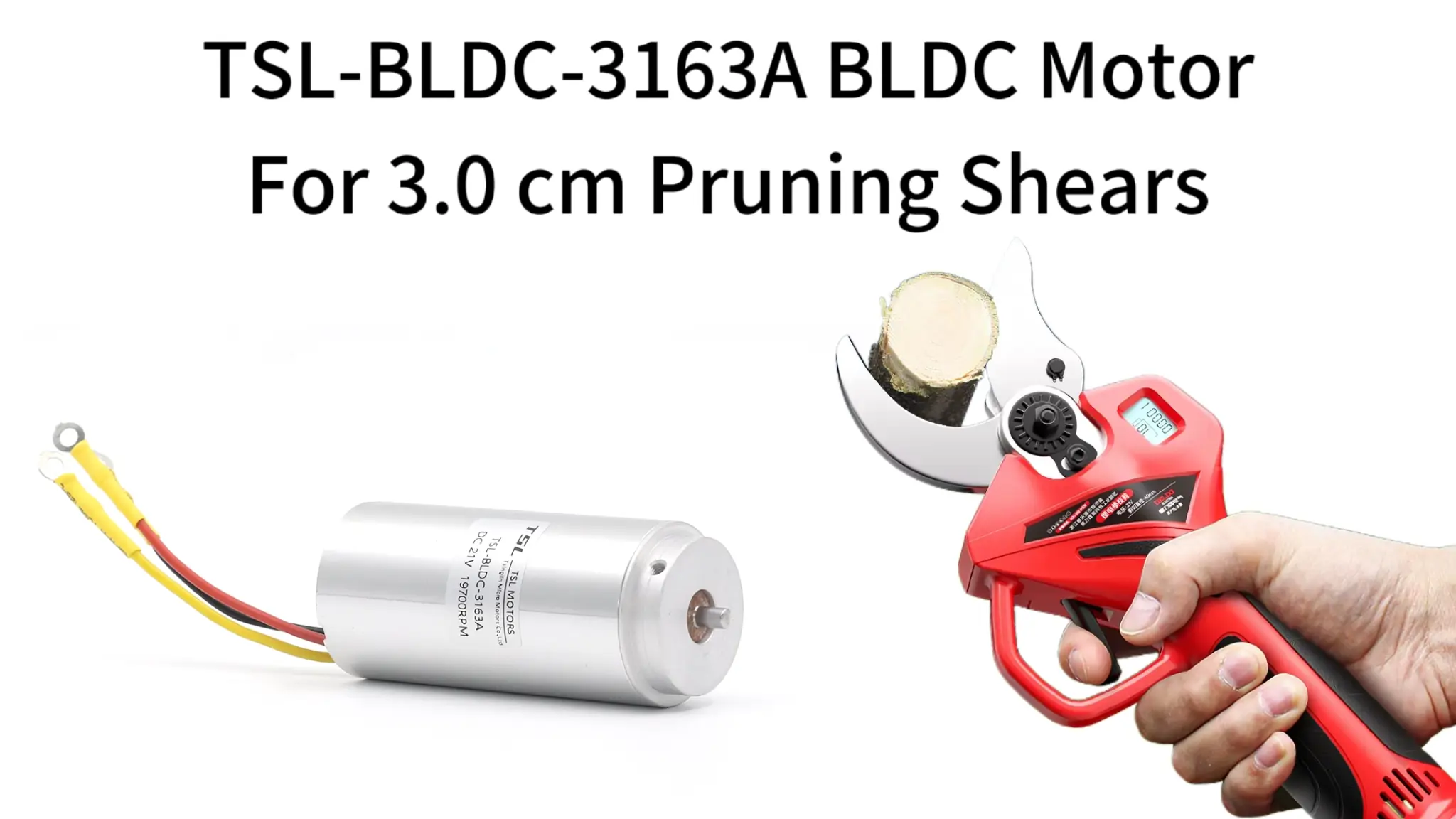
The motor is the core power source of the whole tool. Its performance directly affects cutting efficiency, service life, and user experience. The TSL-BLDC-3163A inner-rotor brushless DC motor is a dedicated power solution for this mainstream model.
Key Takeaways
- The TSL-BLDC-3163A is a high-performance inner-rotor brushless motor designed for 3.0 cm shears.
- Peak power output of 492.658W ensures fast cutting speed even under heavy load.
- 83.63% peak efficiency significantly extends battery runtime for outdoor work.
- Low rotational inertia allows for immediate blade reset and high-frequency operation.
- The slim 31 mm cylindrical body integrates perfectly into handheld garden tool housings.
- A linear torque-current relationship simplifies precision control and overload protection for the manufacturer.
- Maintenance-free brushless design eliminates the need for brush replacements and reduces tool downtime.
Definition and Working Principle of 3.0 cm Pruning Shears
3.0 cm pruning shears can cut branches with a maximum diameter of about 3.0 cm, or 30 mm. They are mainly used for fruit tree pruning, hedge maintenance, and municipal landscaping. They can efficiently cut common hardwood branches, fruit tree branches, and some shrub stems.
The core principle is the conversion and amplification of electrical energy into mechanical energy. DC power from the battery is converted by the controller into three-phase AC power. This drives the motor to rotate at high speed. The motor outputs high-speed, low-torque power. A planetary gearbox then increases the torque and reduces the speed.
After reduction, the power is transmitted to an eccentric wheel or a crank-link mechanism. It converts rotary motion into the reciprocating linear motion of the moving blade. The moving blade and fixed blade form a cutting pair. Together, they cut the branch. One cutting cycle usually takes 0.3 to 0.8 seconds. After cutting, the motor resets automatically and waits for the next trigger.
Role of the Motor in 3.0 cm Pruning Shears
The power transmission chain of 3.0 cm pruning shears is as follows: motor output shaft -> planetary gearbox -> eccentric wheel or crank-link mechanism -> moving blade. The motor performance must match each transmission stage precisely.
As the power source, the motor outputs high-speed rotary motion. Cutting 3.0 cm branches requires about 300-400 N.m of terminal cutting force. The motor itself only outputs torque at the level of several hundred mN.m. Therefore, a planetary gearbox is needed to amplify the torque.
A 2-stage or 3-stage planetary reduction system is usually used. The reduction ratio is normally between 50:1 and 80:1. It reduces the motor speed from several thousand rpm to several hundred rpm or tens of rpm. At the same time, it increases the torque.
After reduction, the power is sent to the eccentric wheel mechanism. The eccentric wheel drives the connecting rod. The rod pushes the moving blade back and forth. When the moving blade closes against the fixed blade, strong cutting force is generated to cut the branch. After cutting, the motor reverses, or a return spring opens the blade. The tool is then ready for the next cut.
During the whole transmission process, the motor must withstand frequent forward and reverse rotation. It must also handle sudden load changes. This places high demands on dynamic response and impact resistance.
Core Motor Requirements for 3.0 cm Pruning Shears
The working conditions of 3.0 cm pruning shears are complex and variable. The transmission chain requires a highly matched power source. Any weakness in motor performance will directly become a pain point for the whole tool. Based on the working scenario and transmission features, the motor must meet the following requirements.
Instant high torque output: When cutting hard branches or branches with knots, the load can reach its peak instantly. The motor must provide enough stall torque in a short time. This prevents blade jamming and motor stalling.
High power density: Handheld tools have strict limits on size and weight. The motor must output more than 400 W within a diameter of about 31 mm. This keeps the whole tool lightweight and reduces fatigue during long use.
High efficiency and low heat: Outdoor work depends on battery power. A high-efficiency motor can greatly extend runtime. During continuous work, motor temperature rise must stay within a reasonable range. This prevents performance loss or damage caused by overheating.
Strong impact resistance: Frequent starts, stops, and sudden load changes impact the bearings, windings, and magnets. The motor needs a strong structural design. This ensures stable long-term operation.
Good control characteristics: The motor needs a linear torque-current relationship. This helps the controller achieve accurate torque control and overload protection. It improves safety and reliability.
Why Choose an Inner-Rotor Brushless DC Motor
The current electric pruning shear market mainly uses three motor solutions. They are brushed DC motors, outer-rotor brushless DC motors, and inner-rotor brushless DC motors. They differ greatly in core performance. These differences directly affect user experience and life-cycle cost.
Brushed DC Motor
This was the earliest solution used in electric pruning shears. It has a simple structure and low cost. Its control logic is also relatively easy.
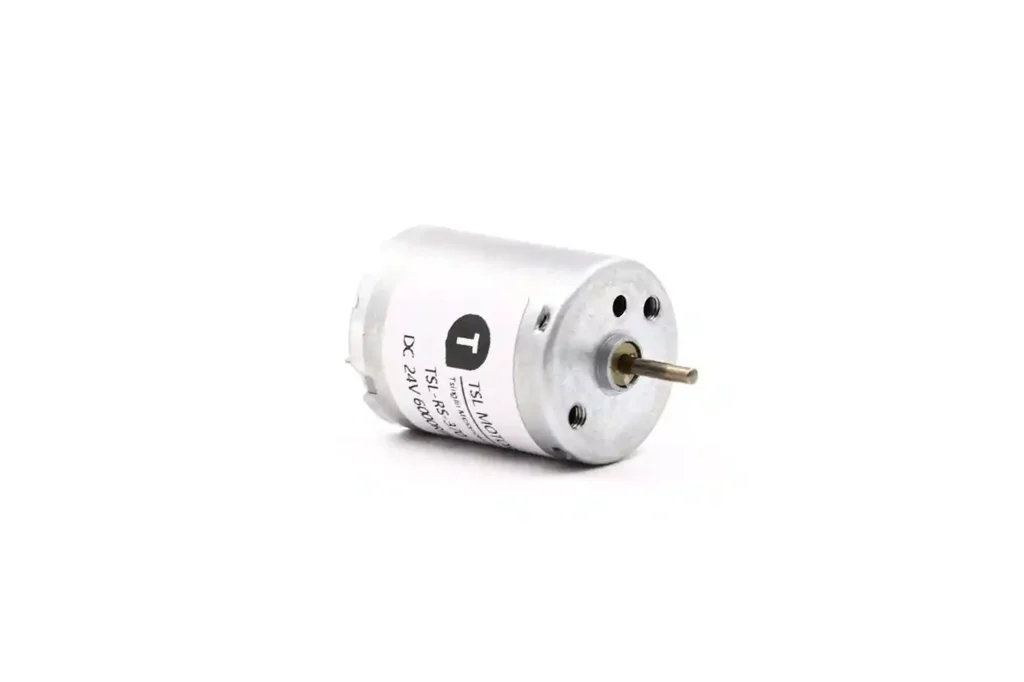
However, mechanical friction between the carbon brushes and the commutator causes average torque response and low power density. The brushes also wear over time. They usually need replacement after several hundred hours. This increases maintenance cost and shortens service life.
In addition, heat dissipation is average. During long continuous work, overheating can cause speed reduction. This makes it hard to meet the heavy-load needs of 3.0 cm pruning shears.
Outer-Rotor Brushless Motor
Outer-rotor brushless motors solve the problem of brush wear. They offer long service life and low maintenance cost. Their power density is also higher than that of brushed motors.
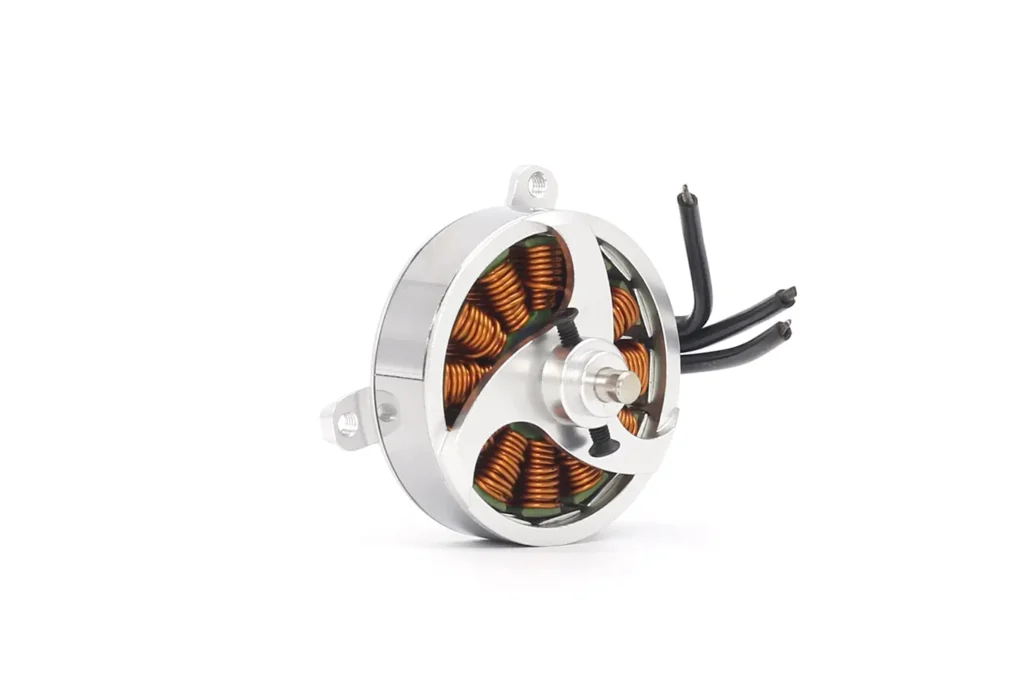
However, the rotor is on the outside. The stator windings are enclosed inside the rotor. This blocks the heat dissipation path. Temperature rise is high during continuous work. Long-term use can affect the magnetic performance of the permanent magnets. Its structure also makes it less suitable for the internal space and transmission mechanism of 3.0 cm pruning shears.
By comparison, inner-rotor brushless motors show clear advantages in all key performance indicators. They have become the preferred power solution for 3.0 cm pruning shears. The rotor is inside the motor. Rotational inertia is low. Start, stop, forward rotation, and reverse rotation are fast. The motor can respond quickly to cutting commands.
Even when cutting hard branches with knots, it can instantly output enough power. This helps prevent blade jamming and motor stalling. At the same size, an inner-rotor brushless motor can output higher power and torque. It fully meets the high cutting-force demand of 3.0 cm pruning shears.
Performance Matching Advantages of the TSL-BLDC-3163A Motor
The TSL-BLDC-3163A is an inner-rotor brushless DC motor designed for medium-power handheld electric tools. Its performance parameters are specially optimized. They closely match the needs of 3.0 cm pruning shears.
In terms of power output, the motor reaches a stall torque of 955.236 mN.m at a rated voltage of 21 V. Its maximum output power is 492.658 W. With a gearbox, it can easily cut hard branches with a diameter of 3.0 cm. Even when it meets knots or other high-resistance areas, the blade can still cut quickly. This effectively prevents blade jamming.
At the same time, the motor torque constant is 10.962 mN.m/A. Current and torque have a good linear relationship. This helps the controller achieve accurate torque control and overload protection.
In terms of efficiency, the maximum efficiency of the TSL-BLDC-3163A reaches 83.63%. At a typical working torque of 360 mN.m, efficiency still reaches 64.36%, with an output power of 462.781 W. This high efficiency greatly reduces battery energy loss and extends runtime.
Overview of the TSL-BLDC-3163A Motor
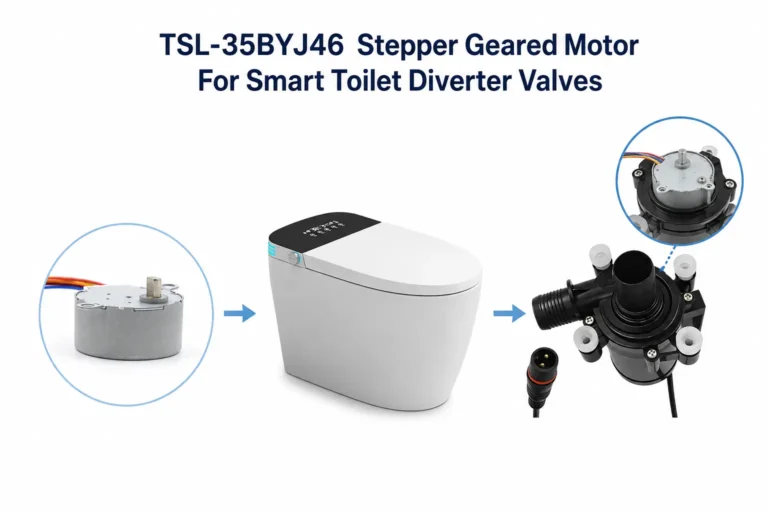
The TSL-BLDC-3163A uses a compact cylindrical structure. The body diameter is 31 mm. The total length is 68.1 mm. The overall size is small. It fits well into the internal space layout of 3.0 cm pruning shears.
Customization Service Support
As a professional brushless DC motor manufacturer, we can customize the TSL-BLDC-3163A motor in all aspects according to the needs of different tool manufacturers.
- Performance parameter customization: Rated voltage, speed, torque, and other parameters can be adjusted. This matches gearboxes with different reduction ratios and blades of different specifications.
- Structural customization: Shaft diameter, shaft length, wiring method, and wire length can be modified. This meets different wiring and assembly requirements.
- Protection level customization: IP54 and higher protection levels are available. They meet the needs of rainy, dusty, and other harsh environments.
- Supporting solution: Matching drive controllers and sensor solutions can be provided. This helps customers shorten the product development cycle.
We have complete test equipment and a professional technical team. We can provide one-stop technical support from motor selection and performance testing to complete-tool debugging. This helps customers quickly complete product verification and market launch.
Future Outlook for 3.0 cm Pruning Shears and Brushless Motors
As garden mechanization continues to improve, 3.0 cm pruning shears will move toward lighter weight, smarter functions, and longer runtime. Future pruning shears will integrate intelligent torque adjustment, battery management systems, wireless connection, and other functions. This will enable more accurate and efficient operation.
Brushless motor technology will also continue to improve. Permanent magnet materials with higher energy density, more optimized winding designs, and more advanced control algorithms will further improve motor efficiency and power density. They will also reduce motor size and weight.
At the same time, integrated motor and drive controller design will become a trend. It will reduce wiring and assembly difficulty. It will also improve system reliability.
Summary
As a core garden maintenance tool, 3.0 cm pruning shears depend on motor technology for performance improvement.
With strong instant torque output, high power density, high efficiency, and a reliable structural design, the TSL-BLDC-3163A inner-rotor brushless DC motor solves the key power pain points of 3.0 cm pruning shears. It can greatly improve cutting performance, runtime, and service life.
We will continue to follow the development trends of the garden tool industry. We will keep optimizing motor performance and customization services. We will provide tool manufacturers with higher-quality and more reliable power solutions. Together, we will promote the upgrade and development of the garden tool industry.