
At a Glance
- Steel gears: Best for high torque, impact loads, and compact high-power applications.
- Powder metallurgy gears: A balanced choice for load capacity, cost, and mass production.
- POM plastic gears: Ideal for low-noise, lightweight, and cost-sensitive applications.
- Mixed-material gears: Combine POM and steel gears to balance noise reduction and load capacity.
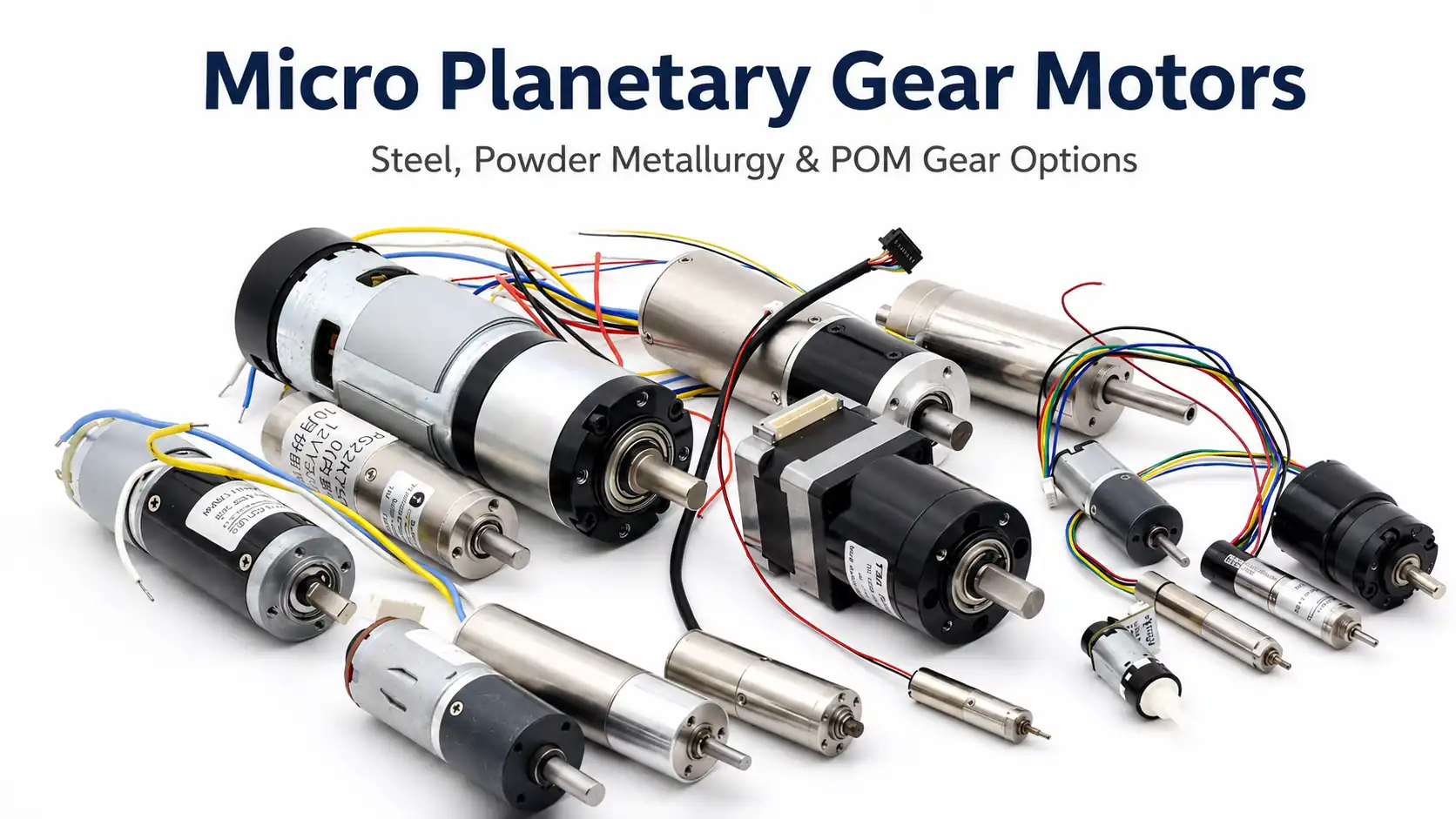
When selecting a micro planetary gear motor, many customers first focus on motor power, gear ratio, output speed, and rated torque. However, in actual projects, another important factor is often overlooked: what material are the gears inside the planetary gearbox made of?
For the micro planetary gear motors discussed in this article, with diameters ranging from approximately 6 to 60 mm, the mainstream gear materials currently used in the market can generally be divided into three categories: steel gears, powder metallurgy metal gears, and plastic gears. Among plastic planetary gears, POM is one of the most commonly used materials.
TSL MOTOR provides steel gear, powder metallurgy gear, POM plastic gear, and mixed-material planetary gear motor solutions. This article compares their main differences and suitable applications.
Steel vs. Powder Metallurgy vs. POM Plastic Gears
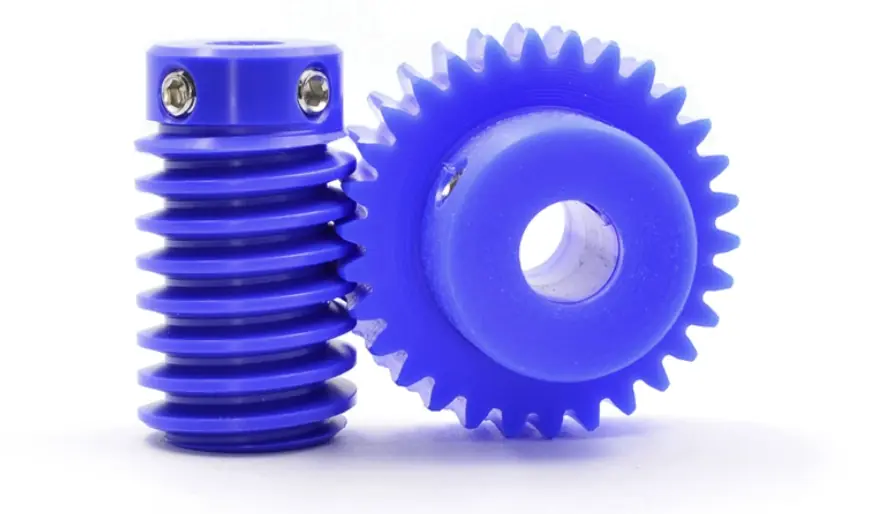
The three main materials used for planetary gears are steel, powder metallurgy metal, and POM plastic.
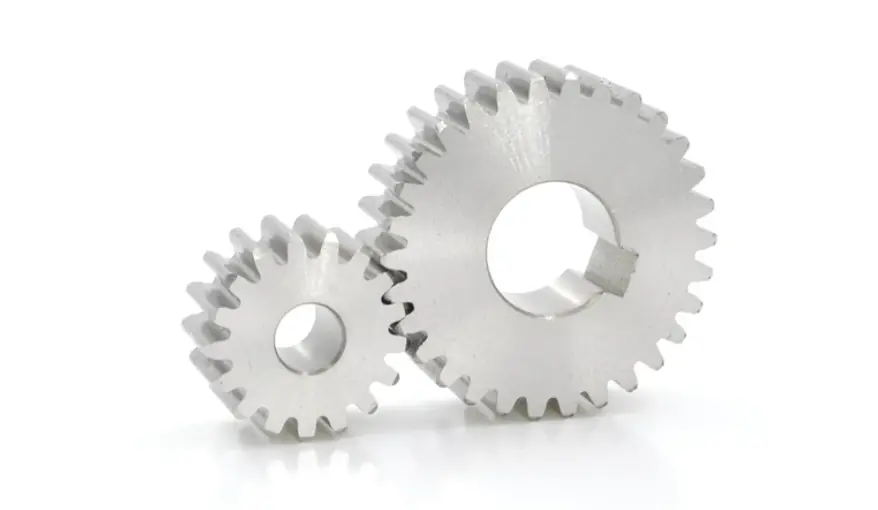
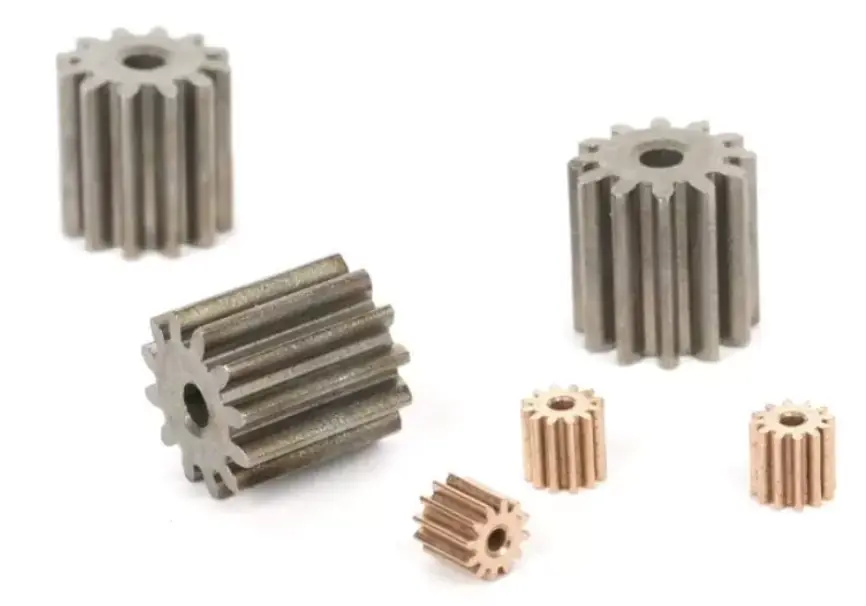
Steel gears offer high strength, hardness, and load capacity. Powder metallurgy gears are efficient to manufacture, suitable for complex shapes, and provide a good balance of performance, noise, and cost.
POM gears are lightweight, low-friction, wear-resistant, and suitable for injection molding. However, their heat resistance and load capacity are lower than those of metal gears.
| Comparison Item | Steel Gears | Powder Metallurgy Gears | POM Plastic Gears |
| Image |
 |
 |
 |
| Load Capacity | High | Medium to high | Low to medium |
| Operating Noise(16mm Planetary Gear Motor) | ≤55dB | ≤50dB | ≤35dB |
| Manufacturing Cost | High | Medium | Low in mass production |
| Product Weight | Relatively heavy | Relatively heavy | Light |
| Main Advantages | High torque and impact resistance | Balanced performance and cost | Low noise and lightweight |
| Typical Applications | Industrial equipment, robotics, high-load actuators | Automation equipment, appliances, small actuators | Automotive comfort systems, medical equipment, smart home products |
Powder Metallurgy Gears
Powder metallurgy gears are widely used in micro planetary gear motors.
Manufacturing Process
Powder metallurgy gears are not directly machined from a solid piece of metal. Instead, they are manufactured by mixing metal powders, compacting them into shape, sintering them, and applying additional finishing processes when required.
The basic process generally includes:
- Metal powder preparation and mixing;
- Compaction in a mold;
- High-temperature sintering;
- Sizing, heat treatment, oil impregnation, or other post-processing according to product requirements.
This manufacturing method can produce gears close to their final dimensions directly from a mold, reducing the amount of material removal required. It is therefore particularly suitable for the mass production of small gears in large quantities.
Main Advantages
The main advantage of powder metallurgy gears is their well-balanced overall performance.
First, they are still metal gears, so their load capacity is generally significantly higher than that of ordinary POM plastic gears. For many low- and medium-load applications, as well as some medium- to high-load applications, powder metallurgy gears can provide sufficient performance.
Second, powder metallurgy is highly suitable for mass production. A multi-stage micro planetary gearbox may contain many sun gears and planet gears. If all of these components are produced through complex precision machining, manufacturing costs increase as the number of reduction stages increases.
Powder metallurgy offers several advantages:
- High production efficiency for large quantities;
- High material utilization;
- Suitable for forming small and complex components;
- Generally lower cost than high-precision machined steel gears;
- Lubrication performance can be improved through oil impregnation and similar treatments.
Therefore, for projects that require reasonable load capacity while also placing importance on cost control, powder metallurgy gears are often a practical choice.
Main Disadvantages
The main limitation of powder metallurgy gears is their maximum load capacity.
Traditional sintered materials normally contain a certain level of porosity. Their performance is therefore affected by material composition, compaction density, sintering process, and post-treatment quality.
Greater care is required when gears are exposed to the following conditions for extended periods:
- Continuous high loads;
- Frequent forward and reverse rotation;
- Large impact loads;
- Severe stalling;
- Long-term operation close to the maximum torque limit.
There can also be significant performance differences between different types of powder metallurgy gears. Conventional sintered gears, high-density sintered gears, and reinforced powder metallurgy gears should not be treated as equivalent products.
For this reason, in high-load applications, a product should not automatically be assumed to have the same load capacity as a high-performance steel gear simply because it is described as using “metal gears.”
Applications
Powder metallurgy gears are suitable for micro drive applications with relatively stable loads and where product cost also needs to be controlled.
Common applications include:
- Smart home products;
- Electric curtains;
- Small valve actuators;
- Household appliances;
- Small automation equipment;
- General electric actuators;
- Some service robots.
These products normally require a certain level of output torque but do not operate continuously at their maximum load or experience frequent severe impacts.
TSL MOTOR can provide powder metallurgy micro planetary gear motor solutions according to the required diameter, gear ratio, output speed, and rated torque. For many general automation and consumer product applications, this type of solution offers a good balance of performance and cost.
Steel Gears
When a micro planetary gear motor needs to deliver higher output torque, withstand more frequent impact loads, or achieve higher torque density within a smaller size, steel gears are usually more suitable.
Manufacturing Process
Steel gears are generally made from alloy steel or other high-strength steels suitable for mechanical transmission.
Depending on product requirements, the manufacturing process may include:
- Turning;
- Gear hobbing;
- Gear shaping;
- Heat treatment;
- Carburizing and quenching;
- Precision finishing or gear grinding.
Micro steel gears have very small diameters and modules, so they are not easy to manufacture. As gear size decreases, the requirements for machining equipment, cutting tools, heat-treatment deformation control, and inspection capability generally become more demanding.
The performance advantages of steel gears come from the combination of material properties and manufacturing processes. High performance cannot be achieved simply by replacing plastic or sintered metal with steel.
Main Advantages
The most obvious advantage of steel gears is their high load capacity.
With proper material selection and heat treatment, gears can achieve both high surface hardness and sufficient internal toughness. This makes them more suitable for higher tooth contact loads and tooth-root bending loads.
The main advantages of steel gears include:
- High load capacity;
- Good rigidity;
- Strong impact resistance;
- Better suitability for frequent forward and reverse rotation;
- Suitable for high torque-density designs.
For example, robotic finger joints may need to accelerate, decelerate, stop, and reverse direction repeatedly during operation. Industrial actuators may also experience sudden changes in load. These operating conditions place higher demands on gear fatigue strength and impact resistance, making steel gears more suitable.
Main Disadvantages
The first disadvantage of steel gears is cost.
A multi-stage micro planetary gearbox contains many small gears. If the sun gears and planet gears are all manufactured as high-precision machined steel components, the machining, heat treatment, inspection, and assembly costs increase as the number of reduction stages increases.
The second issue is noise control.
Steel gears have high rigidity, and vibration generated during metal-to-metal gear engagement can be transmitted more easily through the gears, bearings, and gearbox housing.
Of course, steel gears do not necessarily mean high noise. Actual noise performance is also affected by:
- Gear tooth profile accuracy;
- Tooth surface roughness;
- Concentricity;
- Gear backlash;
- Lubricating grease;
- Bearing structure;
- Gearbox housing design.
Therefore, steel gears provide clear value in high-load applications. However, if a product does not require high load capacity, there is no need to increase unnecessary costs simply for the purpose of using an “all-steel gear” design.
Main Applications
Steel-gear micro planetary gear motors are mainly used in applications involving high loads, impact loads, or frequent speed changes.
Typical examples include:
- Robot joints;
- Dexterous hand actuators;
- High-load grippers;
- Small industrial actuators;
- Power tools;
- Industrial automation equipment;
- Certain automotive actuators.
In addition to rated torque, these projects also need to consider short-term peak loads, frequent starts and stops, forward and reverse rotation, and possible stalling conditions.
TSL MOTOR can provide small-diameter steel planetary gear motor solutions for projects requiring high output torque within limited installation space. When customers require both compact size and high torque, steel gears are often one of the preferred options.
POM Plastic Gears
POM has relatively low friction together with good wear resistance and dimensional stability.
Its core value is not to achieve the highest possible output torque, but to improve noise performance, reduce weight, and increase mass-production efficiency. For this reason, plastic planetary gears continue to have strong market demand in products where user experience is important.
Manufacturing Process
POM gears are generally produced in large quantities through precision injection molding.
The plastic material is heated and injected into the mold cavity, then cooled and formed into the required gear shape. For small planetary gears, this process offers high production efficiency.
Its main characteristics include:
- Suitable for mass production;
- Capable of directly forming complex gear structures;
- Less secondary machining required;
- Lower cost under large-volume production conditions.
However, the quality of plastic gears depends heavily on mold quality and injection molding control. Material shrinkage, temperature control, cooling conditions, and mold precision all affect the final dimensions of the gears.
Therefore, high-quality POM gears should not be regarded as simple low-cost plastic components. Stable tooling and manufacturing control are also required.
Main Advantages
The most obvious advantage of POM plastic gears is low operating noise.
Compared with metal gears, engineering plastics have a certain ability to absorb vibration and provide damping. The gear teeth can also undergo slight elastic deformation under load, helping to reduce the impact caused by some gear meshing errors.
Other advantages of POM gears include:
- Lightweight;
- Low friction;
- Good wear resistance;
- Suitable for mass-production injection molding;
- Lower dependence on complex lubrication systems.
For actuators installed inside vehicles, medical equipment, bedrooms, or offices, operating noise can directly influence how users perceive product quality.
In these applications, low noise is therefore an important performance indicator in itself.
Main Disadvantages
The most obvious limitation of POM plastic gears is load capacity.
Compared with steel gears and powder metallurgy gears, POM has lower rigidity and ultimate strength. Under continuous high-load operating conditions, the following factors need to be considered:
- Tooth surface temperature rise;
- Material creep;
- Tooth profile deformation;
- Fatigue damage;
- Performance changes in high-temperature environments.
The internal space of a micro planetary gearbox is limited. When rotational speed or load is high, heat may accumulate inside the gearbox.
For this reason, POM gears are more suitable for applications with controlled loads, sensitivity to noise, and lightweight requirements, rather than for every high-torque project.
In addition, using POM gears does not automatically mean that the gearbox will be quiet. Gear accuracy, tooth profile design, backlash, lubrication, and housing structure still affect final noise performance.
Main Applications
POM plastic gears are widely used in automotive comfort systems, smart home products, medical equipment, office equipment, and consumer electronics.
An automotive power tailgate is a typical example.
A power tailgate actuator must not only complete the basic opening and closing functions but also control operating noise. If noticeable high-frequency gear whine occurs while the tailgate is opening or closing, it may negatively affect the user’s perception of overall vehicle quality, even if the mechanism functions normally.
For this reason, TSL MOTOR has also developed plastic planetary gear motor solutions for low-noise applications such as automotive power tailgates.
In these applications, POM gears are not selected simply to reduce manufacturing costs. They are used to optimize operating noise while still meeting the load requirements of the application.
In addition to fully POM gear solutions, TSL MOTOR can also provide mixed-material structures according to project requirements. For example:
- The first planetary reduction stage uses POM gears;
- The following high-load reduction stages use steel gears.
This structure takes advantage of the vibration absorption and low-noise characteristics of POM gears while using steel gears in the later stages to carry higher output loads. For projects requiring both low noise and relatively high output torque, this mixed-material solution can offer practical benefits.
16 mm Case Study: Why Can a Higher Gear Ratio Have a Lower Rated Torque?
A common misunderstanding during gear motor selection is that a higher gear ratio must always result in a higher rated output torque.
In theory, when all other conditions are exactly the same, increasing the gear ratio can increase output torque. However, in real micro planetary gear motors, it is rare for “all other conditions” to be completely identical.
TSL MOTOR 16 mm Micro Planetary Gear Motor Case Study
Take two 16 mm micro planetary gear motors from TSL MOTOR as an example. Both solutions use the same 1636 motor, but their rated output capabilities are different.
- TSL-PG16-KW1636: 850:1 gear ratio, rated torque of 7.988 kg·cm;
- TSL-16GP-TEC1636: 1024:1 gear ratio, rated torque of 5 kg·cm.
This shows that the output capability of a micro planetary gear motor cannot be determined simply by comparing 850:1 with 1024:1.
Why Does This Difference Occur?
After the motor input torque passes through multiple planetary reduction stages, the theoretical output is indeed related to the gear ratio. However, the actual allowable output torque of the gearbox is limited by many other factors.
These include gear material strength, gear width, module, tooth profile, number of planet gears, planet gear pin structure, carrier strength, bearings, output shaft, and overall gearbox design. Any of these components may become the limiting factor for the maximum allowable torque.
A higher gear ratio also usually means more reduction stages.
Adding another planetary reduction stage not only increases the total gear ratio but also introduces additional mechanical losses and more components that must carry load.
Therefore, gear ratio is only one important parameter of a micro planetary gear motor and cannot be used as the only standard for judging gearbox load capacity.
How Should You Choose Between the Three Types of Micro Planetary Gear Motors?
After understanding the three materials, actual selection should still begin with the project requirements.
The simplest approach is to look first at the load, then at size limitations, and finally at noise and cost. TSL MOTOR can provide powder metallurgy, steel gear, POM plastic gear, and mixed-material planetary gearbox solutions. Therefore, the material should not be selected before the actual application requirements are understood.
Low- and Medium-Load Applications
For general low- and medium-load applications, powder metallurgy gears are usually the preferred balanced solution.
They are suitable for:
- Smart home products;
- Small actuators;
- Valve control systems;
- Household appliances;
- Some service robots.
If the load is stable and the gearbox does not operate continuously near its maximum limit, a powder metallurgy planetary gearbox can generally balance load capacity and cost.
High-Load Applications
For high-load or high-impact applications, steel gears should be considered.
Applications such as robot joints, high-load grippers, industrial automation equipment, and power tools need greater attention to:
- Continuous load;
- Peak torque;
- Start-stop frequency;
- Number of forward and reverse cycles;
- Stall risk.
When both compact size and high torque are required, steel gear solutions generally offer greater advantages.
Low-Noise Requirements
For noise-sensitive products, POM gears or mixed-material solutions can be considered.
Typical applications include automotive comfort systems, medical equipment, smart home products, and office equipment.
If a project requires both low noise and relatively high output capability, a mixed design with POM gears in the first stage and steel gears in the following stages can be considered, rather than choosing only between an all-steel or all-plastic structure.
What Other Factors Should Be Considered When Selecting a Micro Planetary Gear Motor?
Gear material is important, but it is only one part of micro planetary gear motor selection.
After selecting the material, torque, operating frequency, motor matching, and installation dimensions must also be considered. Otherwise, even if the correct gear material is selected, the complete gear motor may still not be suitable for the actual equipment.
Rated Torque
Rated torque should be considered first, rather than looking only at maximum torque.
A gear motor may withstand a high load for a short period, but this does not mean that it can operate continuously under the same condition.
Operating Frequency
The same 5 kg·cm load can have very different effects on a gearbox depending on whether the motor runs ten times per day or continuously for several hours.
For continuous operation, special attention should be paid to:
- Gear wear;
- Lubricating grease condition;
- Bearing life;
- Internal temperature rise.
For robots and automation equipment with frequent forward and reverse rotation, the fatigue performance of gears, pins, and planet carriers should also be carefully considered.
Motor Matching
A planetary gearbox does not generate power by itself. It must operate together with a brushed DC motor, brushless DC motor, coreless motor, stepper motor, or another drive source.
The same gearbox combined with different motors can produce significantly different overall performance.
Therefore, the following factors should also be considered:
- Rated motor speed;
- Operating voltage;
- Operating current;
- Output power;
- Starting capability;
- Motor service life.
A properly selected micro planetary gear motor should treat the motor and gearbox as one complete system.
Installation Dimensions
For a micro drive system, outer diameter is only one of the dimensional parameters.
The project should also confirm:
- Overall motor length;
- Output shaft diameter;
- Shaft extension length;
- Mounting hole positions;
- Flange structure;
- Wiring direction.
Installation space is often very limited in robotics, automotive actuators, medical equipment, and smart home products.
Even if the torque and speed are suitable, a product cannot become a practical solution if the mechanical interface does not fit the application.
Conclusion
For micro planetary gear motors with diameters of approximately 6 to 60 mm, steel gears are more suitable for high-load and high-impact applications, powder metallurgy gears provide a balance between performance and cost, while POM plastic gears are better suited to low-noise and lightweight applications.
For projects that require both low noise and relatively high load capacity, a mixed-material solution can also be used, such as POM gears in the first reduction stage and steel gears in the following stages.
TSL MOTOR can provide steel gear, powder metallurgy gear, POM plastic gear, and mixed-material micro planetary gear motor solutions according to different project requirements. Actual selection should consider load, size, noise, service life, and cost in order to choose the micro planetary gear motor that best matches the application.
FAQ
1. Which gear material is best for a micro planetary gear motor?
It depends on the application. Steel gears are suitable for high loads, powder metallurgy gears balance performance and cost, and POM gears are better for low-noise applications.
2. Are steel gears always better than POM gears?
No. Steel gears offer higher strength, while POM gears provide lower noise, lighter weight, and good cost efficiency in mass production.
3. Does a higher gear ratio always mean higher rated torque?
No. Rated torque also depends on gear material, gearbox structure, reduction stages, bearings, shafts, and other design factors.
4. What gear solutions can TSL MOTOR provide?
TSL MOTOR can provide steel gear, powder metallurgy gear, POM plastic gear, and mixed-material micro planetary gear motor solutions.
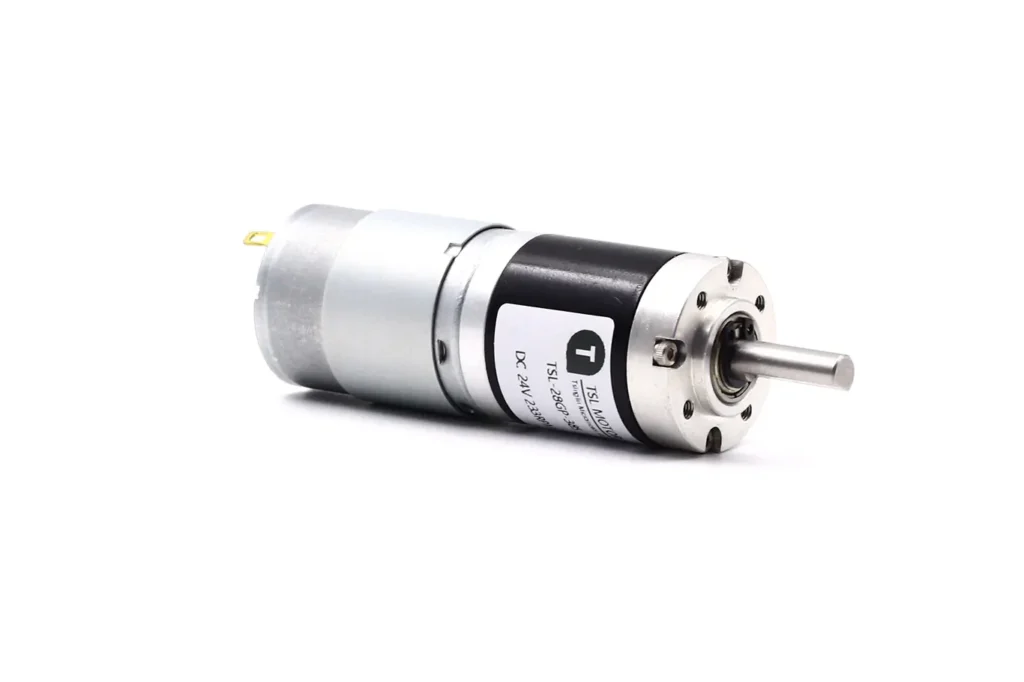
Planetary Gear Motor
Our Planetary Gear Motors are engineered for applications requiring maximum torque density and high efficiency within a compact coaxial design. We take pride in our micro-manufacturing capabilities, offering ultra-miniature planetary gearheads starting at a world-class 4.6mm diameter, specifically designed for medical catheters, surgical tools, and precision optical instruments.