
When service life alone is compared, a brushed DC motor generally does not last as long as a brushless DC motor.
Yet an interesting fact remains: even though brushless motor technology is now highly mature, brushed DC motors are still widely used in power tools, automotive actuators, household appliances, toys, small pumps, printing equipment, and many types of automation mechanisms. Well-known brands such as BLACK+DECKER, Bosch, and DEWALT still sell products powered by brushed motors.
This raises a worthwhile question: if brushed DC motors have a relatively short lifespan, why do so many products still use them?
Key Takeaways
- Brush and commutator wear are the primary factors limiting brushed DC motor life.
- Speed, load, current, temperature, and start-stop frequency affect actual service life.
- Brushed DC motors remain widely used because they are economical and easy to control.
- They are suitable for short-duty, simple, and cost-sensitive applications.
- Brushless DC motors are generally better for continuous operation and reduced maintenance.
Why Do Brushed DC Motors Have a Shorter Lifespan?
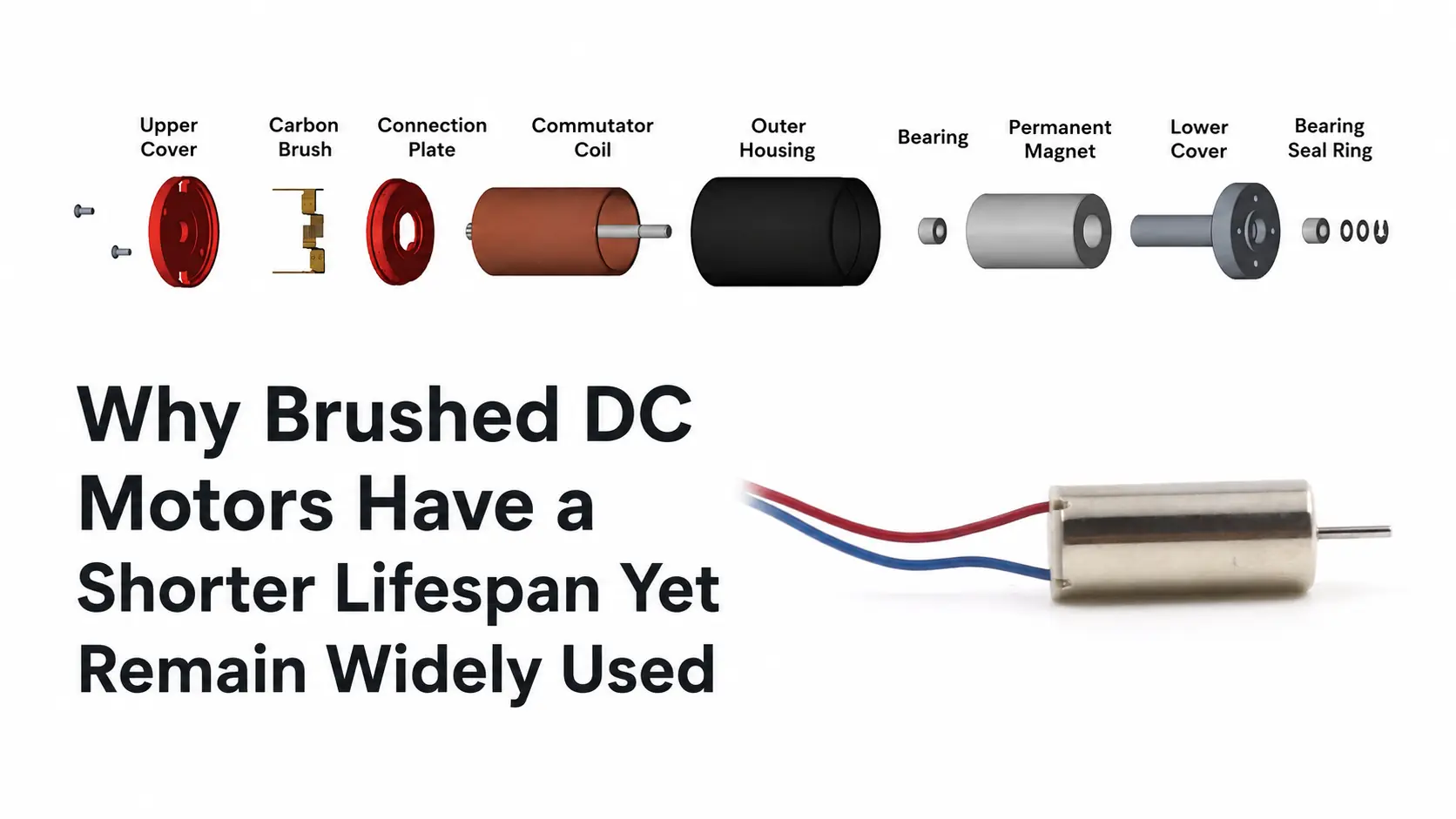
The operating principle of a brushed DC motor includes an inherently wearable component: the brushes. The brushes must remain pressed against the rotating commutator, switching current between commutator segments so that the rotor continues to generate torque.
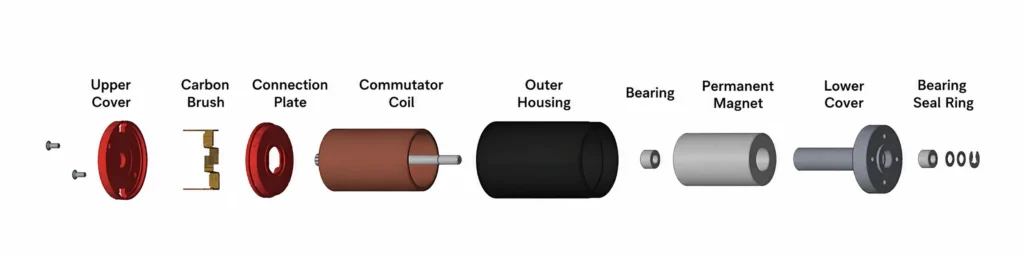
Whenever the motor rotates, friction occurs between the brushes and the commutator. As a result, even if the bearings, magnets, and windings remain in good condition, prolonged wear may cause the brushes to reach the end of their service life first. Over extended operation, the commutator surface may also experience wear, oxidation, or localized damage.
Mechanical brush wear and electrical arcing erosion are two major factors affecting commutator life.
Because the brushes and commutator are in physical contact, the lifespan of a brushed motor is affected by mechanical wear. A brushless motor uses electronic commutation and therefore does not have this brush-wear mechanism.
Brush materials also vary according to operating current. Metal brushes are commonly used in cost-sensitive products, precious-metal brushes are mainly used in low-current, low-output, and low-voltage motors, while carbon brushes are more common in motors designed for higher current and output.
Brush Friction Is Not the Only Factor Affecting Motor Life
Many people assume that brushed motors have a short lifespan only because the brushes eventually wear away. In practice, the mechanism is more complex. In addition to mechanical friction, electrical arcing may occur between the brushes and commutator during current switching, and this also affects motor life.
As a brush moves from one commutator segment to another, the current in the coil must change rapidly. Because the winding has inductance, commutation can produce a high transient voltage and create a small arc between the brush and commutator. Over time, this arcing may electrically erode both surfaces.
Arcing during commutation affects metal brushes and the commutator, while higher current and greater coil inductance can further intensify the effect. For this reason, the same brushed DC motor may have very different service lives when used in different products.
Speed, Load, and Start-Stop Patterns All Affect Brushed DC Motor Life
Motor life cannot be evaluated separately from the actual operating conditions. Even when two motors are identical, their service lives may differ greatly if one runs for only a few minutes per day while the other operates continuously under high load.
For example, higher speed creates more sliding contact between the brushes and commutator per unit of time. Higher load usually means higher current, which can increase arcing and heat. Frequent reversing, starting, and braking also place additional stress on the commutation system. If the motor repeatedly operates near stall or under severe overload, its service life will decline further.
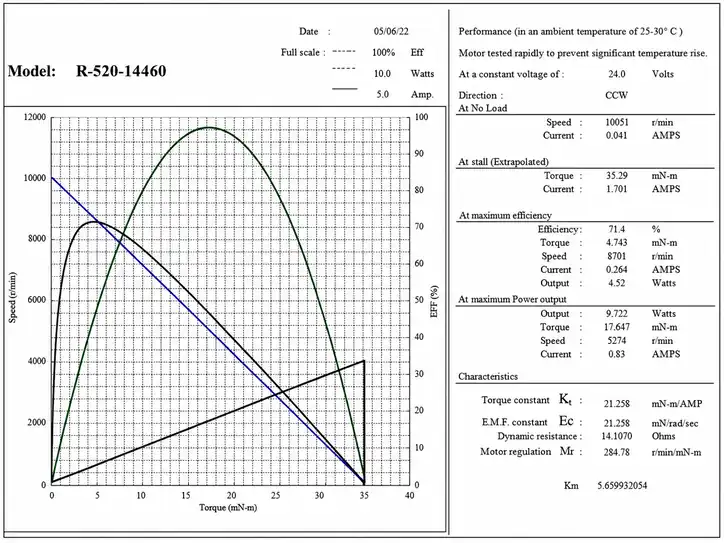
Therefore, when evaluating a brushed DC motor, it is more useful to define the actual operating voltage, speed, load, duration per cycle, start-stop frequency, and ambient temperature than to ask only, “How many hours will this motor last?” This is an essential part of industrial motor selection.
How Long Does a Brushed DC Motor Typically Last?
Service life varies considerably among brushed motors, so there is no single figure that applies to every product. Brush material, commutator design, operating current, bearing structure, speed, and environmental conditions all influence the final result.
A brushed motor may typically provide anywhere from several hundred to several thousand operating hours, while a brushless motor can often achieve a longer service life.
One important point is often overlooked: motor operating life is not the same as the calendar life of the finished product.
For example, an automotive door-lock actuator may run for less than one second each time the door is unlocked. A household drill may accumulate far fewer than 100 hours of actual motor operation in an entire year. Some valves, actuators, and adjustment mechanisms operate for only a few dozen seconds per day.
In these products, even a motor with a theoretical life of only a few thousand hours may far exceed the total operating time required over the life of the equipment.
If Brushless Motors Last Longer, Why Not Use Them in Every Product?
This question is central to understanding why the brushed DC motor market continues to exist.
In industrial design, motor selection is not simply a comparison of which technology lasts the longest. Engineers need to determine which solution offers the most reasonable overall cost while meeting the target performance and required service life.
If a product is designed for a ten-year life but its internal motor will accumulate only 300 operating hours during that period, a brushed motor capable of reliably running for 2,000 hours is already more than sufficient. Adding a more complex driver, control algorithms, and electronic components solely to obtain 20,000 hours or more of theoretical motor life may provide no practical benefit.
Reason One: Brushed DC Motor Control Is Very Simple
One of the greatest advantages of a brushed motor is that the brushes and commutator perform the commutation mechanically. From an external control perspective, the motor therefore usually requires only two power terminals.
Apply DC voltage and the motor rotates. Reverse the polarity and the direction changes. Adjust the voltage or use PWM to control the speed. This makes brushed motors convenient for products that require only forward and reverse rotation, start-stop operation, or basic speed control.
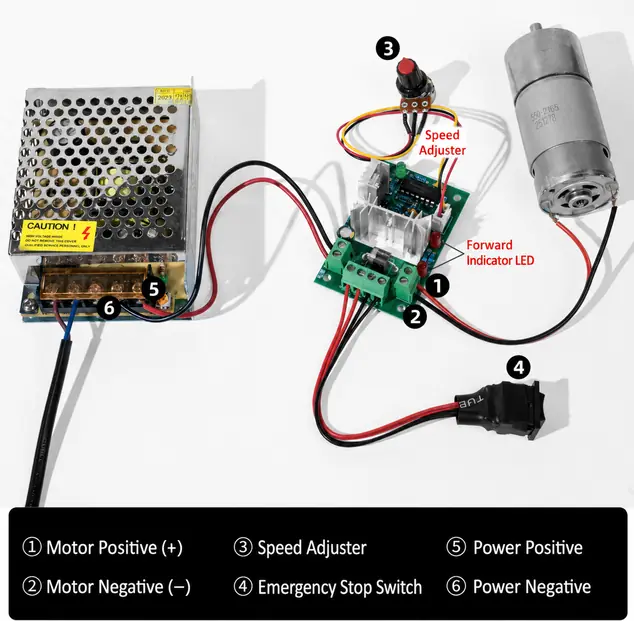
A brushless DC motor, by comparison, requires an electronic driver to perform commutation. A practical system typically includes MOSFETs, driver ICs, control circuitry, and corresponding software logic. Some applications also require Hall sensors or another form of rotor-position detection.
A brushed DC motor can operate directly from a power supply, whereas a brushless motor requires electronic commutation control.
For consumer products priced at only a few dollars or a few dozen dollars, eliminating a complex motor-drive circuit can be more valuable than adding tens of thousands of hours to the motor’s theoretical service life.
Reason Two: The Cost Structure of Brushed DC Motors Is Highly Mature
Brushed DC motors have been manufactured for many years, and the production processes for magnets, rotors, commutators, brushes, bearings, and stamped parts are highly mature. In the small DC motor sector in particular, global supply chains can mass-produce motors with many different diameters, voltages, speeds, and output-shaft configurations.
Product developers can therefore readily find 3 V, 6 V, 12 V, 18 V, and 24 V options. These motors can also be combined directly with worm gearboxes, planetary gearboxes, spur gearboxes, lead screws, or encoders.
For products manufactured in annual volumes of tens of thousands, hundreds of thousands, or even millions of units, saving only one or two dollars per motor can create a substantial total cost difference. Therefore, when a brushed DC motor already satisfies the performance and lifetime requirements, companies will not necessarily add avoidable cost simply because brushless technology is considered more advanced.
Reason Three: Its Torque-Speed Relationship Is Easy to Use
Another practical advantage of brushed DC motors is the relatively intuitive relationship between current, torque, and speed. Within the normal operating range, motor torque is approximately proportional to current, while speed gradually decreases as load increases.
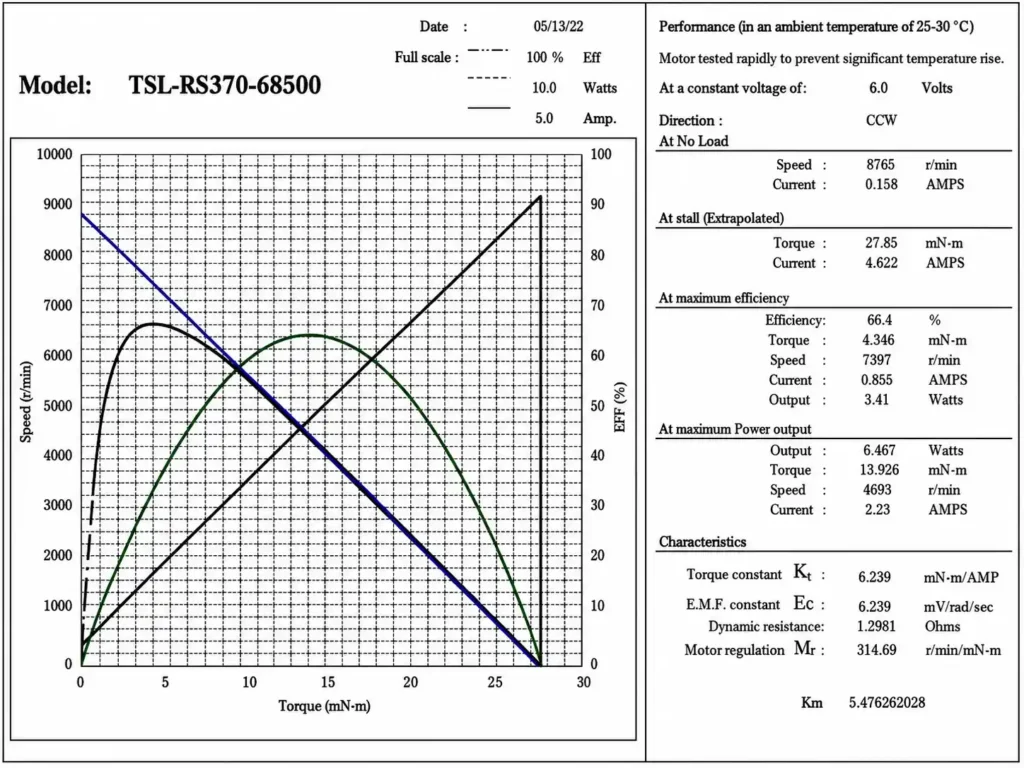
This characteristic is useful in many simple actuators. Engineers can often identify the motor operating point from the required output torque and speed, together with the gear ratio, without relying on complex software control.
BLACK+DECKER Still Sells Power Tools with Brushed Motors
If brushed DC motors had lost their market value because of their lifespan limitations, an obvious question would be: why do major global power-tool brands still use them?
BLACK+DECKER is a representative example.
On the official product page for the 20V MAX POWERCONNECT BCD702 Cordless Drill/Driver, the product specifications explicitly state:
Motor Type: Brushed
In other words, this is not an obsolete product discontinued decades ago; it is still displayed and sold by the brand today.
The official specifications for the BLACK+DECKER BDCI20B 20V MAX Impact Driver likewise identify its motor type as brushed.
These products mainly target household and DIY users, who care more about whether the tool can drill holes and drive screws than whether its motor can operate continuously for tens of thousands of hours. In this usage environment, the practical service life of a brushed motor is generally sufficient.
Even More Interesting: The Same Brand Sells Both Brushed and Brushless Products
BLACK+DECKER is fully aware of the advantages of brushless motors. The company also sells the BLD783D1 Brushless Hammer Drill and explicitly presents higher performance, longer runtime, and longer motor life as benefits of its brushless design.
This better reflects the real market logic: brushed and brushless technologies are not simply a case of an old technology being completely replaced by a new one. They are different solutions selected for different product positions.
Brushless motors demonstrate greater value in high-performance, longer-runtime, or higher-priced products. For general household, entry-level, or price-sensitive products, brushed motors can still offer a very reasonable balance between performance and cost.
Some Bosch Products Are Even Designed Around Carbon-Brush Replacement
Several Bosch Professional products further illustrate this point.
For example, the official description of the Bosch Professional GSB 600 Impact Drill specifically mentions an improved carbon brush and presents the updated brush design as part of the motor’s enhanced durability.
The Bosch Professional GBM 50-2 Magnetic Core Drill even includes a carbon-brush maintenance indicator. When the brushes wear to the point that service is required, the tool can alert the user that they need to be replaced.
This shows that manufacturers of established industrial products do not always treat “never needing to replace the brushes” as a design objective. If the cost and difficulty of replacing a set of carbon brushes are acceptable, a mature brushed motor solution may still offer better overall value.
Many Products Actually Need Sufficient Life, Not Maximum Life
From an engineering perspective, this may be the most important reason brushed motors continue to exist.
If a mechanism operates 20 times per day for two seconds per cycle, its theoretical accumulated motor runtime over ten years is only about 40.6 hours. Of course, a proper lifetime validation cannot rely on this figure alone. It must also account for load, starting current, stall risk, temperature, contamination, reversing, mechanical shock, and an appropriate safety margin.
However, this calculation helps distinguish two concepts that are often confused:
A product’s calendar life is not the same as its motor’s accumulated operating life.
An actuator that runs only briefly may not require tens of thousands of hours of continuous motor capability. For fans, pumps, conveyors, or automation systems that operate for long periods, however, the same brushed motor lifespan limitation may quickly become a critical design issue.
Therefore, “sufficient life” does not mean reducing reliability requirements. It means establishing a reasonable lifetime target based on the actual mission profile.
Which Products Are Still Well Suited to Brushed DC Motors?
Brushed DC motors remain a practical choice for products with short operating times, simple motion requirements, or high cost sensitivity. Examples include door locks, adjustment mechanisms, power tools, small pumps, toys, vending equipment, compact actuators, vibration mechanisms, and many other short-duty transmission systems.
For example, TSL Motor’s DC Vibration Motor range includes both brushed and brushless solutions. Its brushed vibration motors are available in multiple sizes, with eccentric weights and mounting structures that can be adjusted for specific requirements. This product category demonstrates that even within the same application, there is not necessarily a single preferred motor technology.
If a device requires only basic forward and reverse rotation, starting and stopping, or speed adjustment, a brushed motor can also reduce control-system complexity considerably. The more appropriate way to choose between brushed and brushless designs is to consider operating time, lifetime targets, available space, cost, and control requirements—not simply which technology sounds newer.
When Is a Brushless DC Motor the Better Choice?
If a motor must operate continuously for several hours each day—or even 24 hours a day—the absence of brush wear becomes an increasingly important advantage. Avoiding carbon-brush replacement is also valuable when the equipment is difficult to access for maintenance or when downtime is costly.
A brushless DC motor is generally the better choice for applications requiring high speed, high efficiency, long continuous operating periods, or an extended service life. BLACK+DECKER likewise highlights runtime and motor-life advantages on its brushless hammer drill.
There is therefore no need to treat either technology as universally superior. The correct selection question is: which commutation method best matches the specific application?
Need Brushed DC Motor Samples or Small-Batch Validation?
For prototypes, R&D, and small-batch production, Micronix Motor supports standard motor samples and low-quantity purchasing. TSL Motor accepts online orders starting with small sample quantities, making it suitable for early electrical and mechanical validation.
We support small-batch orders and customization. For special windings, voltages, target speeds, output shafts, wire lengths, connectors, encoders, or transmission structures, low-quantity production feasibility must be evaluated against the specific engineering requirements.
When submitting a project, it is helpful to provide the target voltage, operating speed, continuous and peak load torque, motor size constraints, duration per cycle, number of cycles per day, ambient temperature, and estimated purchase quantity. Compared with a general request for “a high-torque brushed motor,” these details allow us to determine much more quickly whether a standard model is suitable or whether the winding and mechanical interface need to be redesigned.
Individual / Lab / Sample Inquiry: support@micronixmotor.com
OEM / Volume Production Inquiry: inquiry@micronixmotor.com
Conclusion
The service-life limitations of a brushed DC motor mainly arise from brush wear, commutation arcing, operating current, speed, load, and the working environment. In practical product design, however, motor selection is not about pursuing the longest possible life in isolation. It is about balancing the required service life with performance, cost, space, and control-system complexity.
For equipment with short operating periods, simple motion requirements, high cost sensitivity, or a need for rapid prototype validation, brushed DC motors still offer significant value. Their advantages include simple control, mature supply chains, a broad range of specifications, and easy integration with gearboxes and encoders. If an application requires long continuous operation, higher efficiency, less maintenance, or higher speed, a brushless DC motor is generally the more appropriate option.
Therefore, the key question is not whether a brushed DC motor has a shorter theoretical lifespan than a brushless motor. It is whether the motor’s actual service life can cover the product’s mission profile with an adequate reliability margin. Only by evaluating the operating voltage, load torque, runtime, start-stop frequency, ambient temperature, and expected purchase volume can engineers select a motor that genuinely matches the application.
Frequently Asked Questions About Brushed DC Motors
Q1:How long does a brushed DC motor last?
Depending on brush material, speed, load, current, and operating environment, its service life may range from several hundred to several thousand hours. Actual duty-cycle testing is recommended.
Q2:Can a brushed DC motor run continuously?
Yes, if it is rated for continuous duty and its current and temperature remain within specified limits. For long daily operating hours, a brushless motor may be more suitable.
Q3:Should I choose a brushed or brushless DC motor?
Choose a brushed motor for simple control, short operating cycles, and cost-sensitive applications. Choose a brushless motor for continuous operation, higher efficiency, longer life, and reduced maintenance.
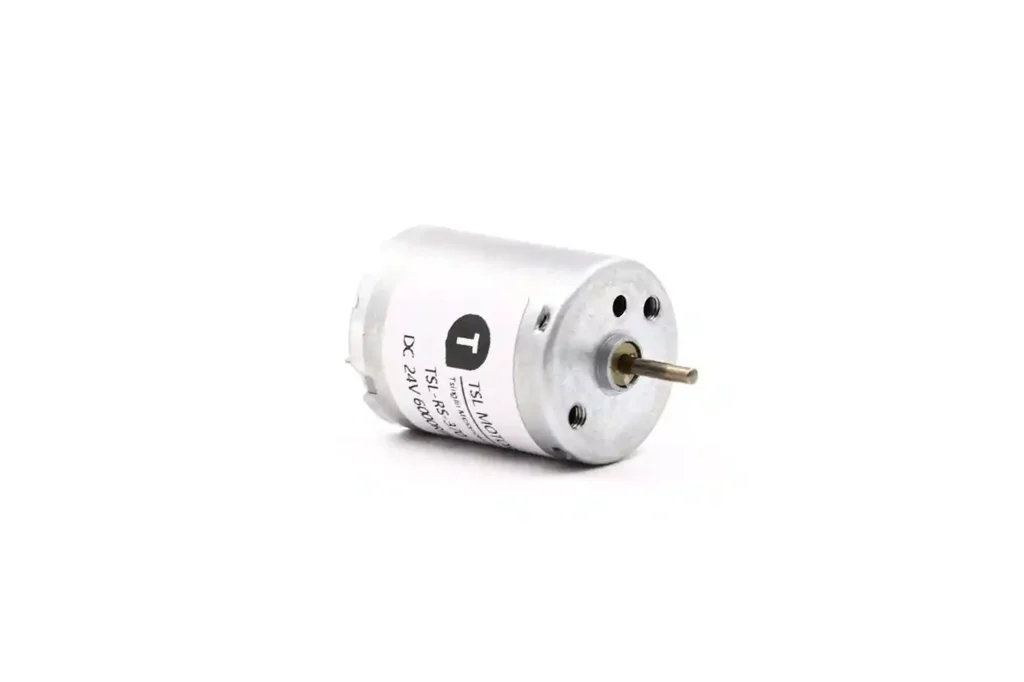
Brushed DC Motor
Our brushed dc motors provide a reliable and cost-effective solution for applications requiring simple control and robust performance. Utilizing a traditional commutator and brush system, these motors deliver high starting torque and are easily controlled using a simple DC power source or PWM controller.