
In modern medical dermatology treatment, digital phototherapy equipment is becoming a mainstream clinical solution. It offers precise irradiation, safe operation, and high efficiency.
The skintrek® PT5 phototherapy device is a representative precision treatment device in the industry. The stability and positioning accuracy of its motion control system directly determine treatment effect and safety.
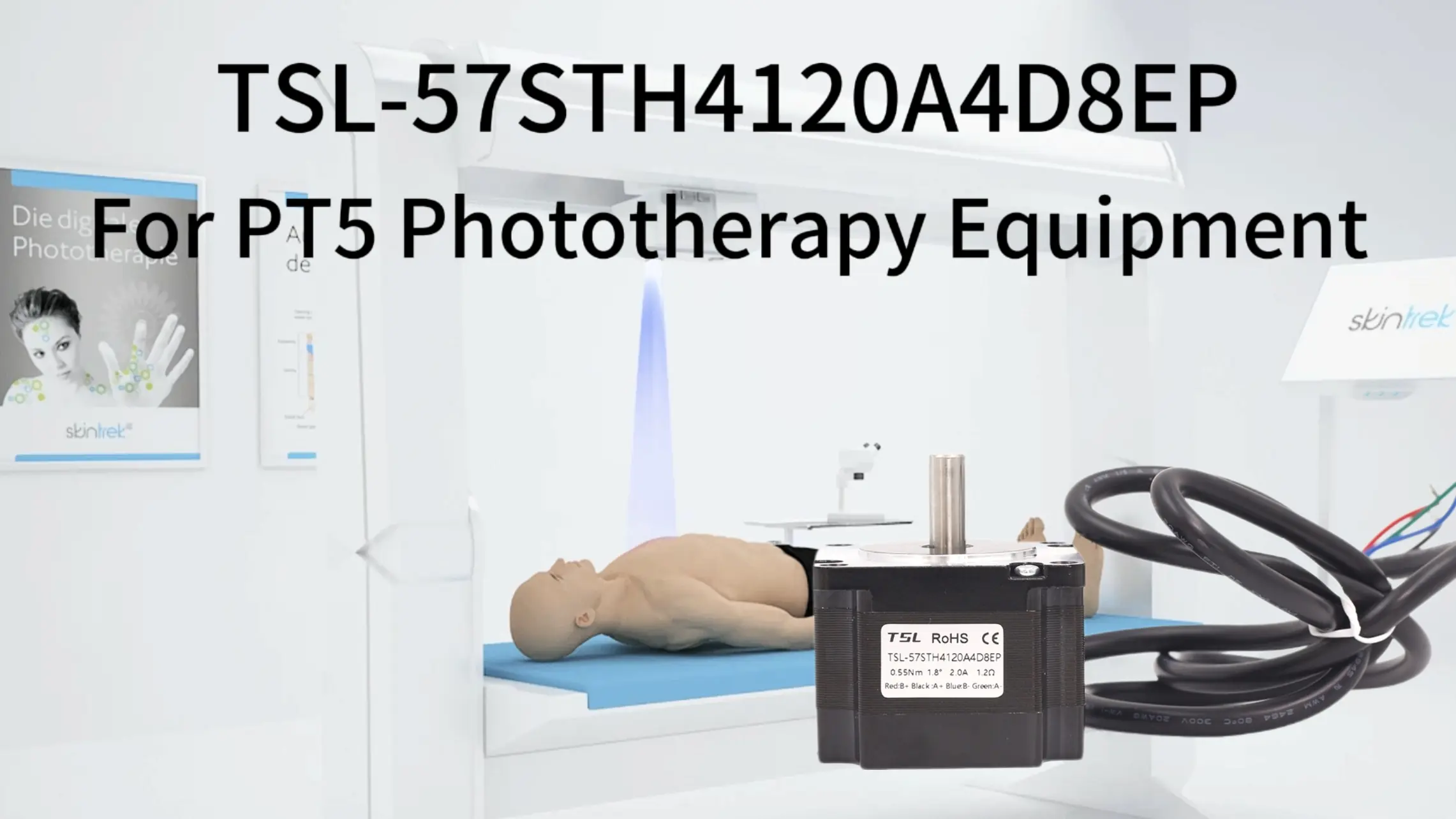
The TSL-57STH4120A4D8EP is a NEMA 23 hybrid stepper motor with an encoder. It offers high precision, high reliability, and easy integration. It can provide stable and efficient drive support for PT5 phototherapy equipment. It meets the strict requirements of medical devices in precision, safety, and durability.
Key Takeaways
- The TSL-57STH4120A4D8EP motor provides closed-loop stability for digital phototherapy systems.
- Integrated high-precision encoders fundamentally solve the step loss problem found in traditional stepper motors.
- The standardized NEMA 23 frame ensures easy integration and lowers equipment modification costs.
- Optimized internal structures deliver the quiet, low-vibration performance required in medical settings.
- High torque output allows for stable driving of heavy lamp heads and beam-adjusting modules.
- Real-time feedback loops ensure that ultraviolet irradiation remains strictly confined to targeted diseased skin.
- Customization options include shaft forms, gearboxes, and electrical connectors to fit various device layouts.
What Is PT5 Phototherapy Equipment
PT5 phototherapy equipment is a professional digital ultraviolet irradiation device for dermatology treatment. It is mainly used for precise irradiation treatment of psoriasis, vitiligo, eczema, and other skin diseases.
Unlike traditional large-area flood irradiation, this device uses digital phototherapy technology. It divides the ultraviolet beam into a large pixel matrix. Through image recognition and dose calculation, it only irradiates the diseased skin area. This reduces the impact on healthy skin as much as possible. It also lowers the risks that may come with long-term phototherapy.
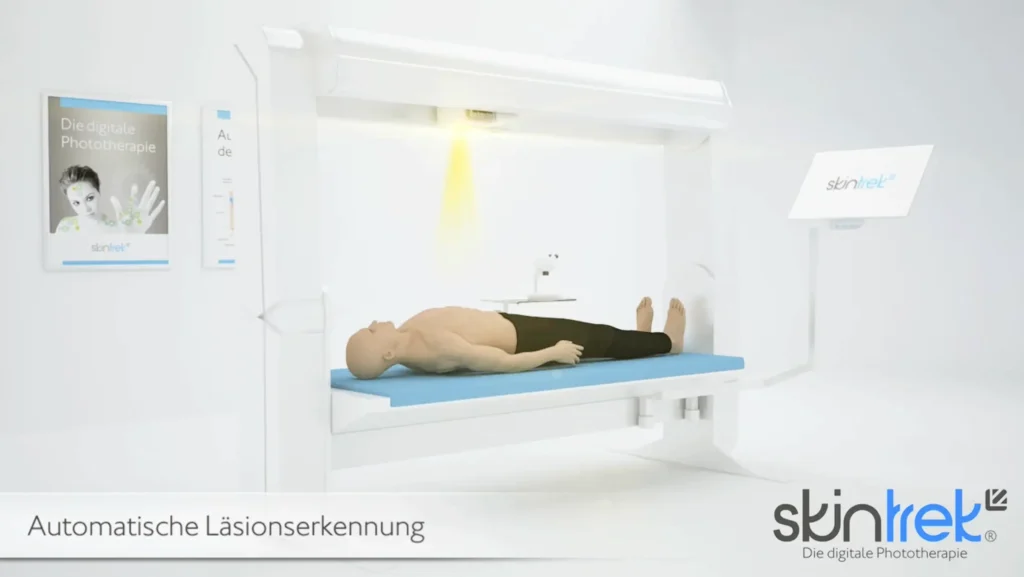
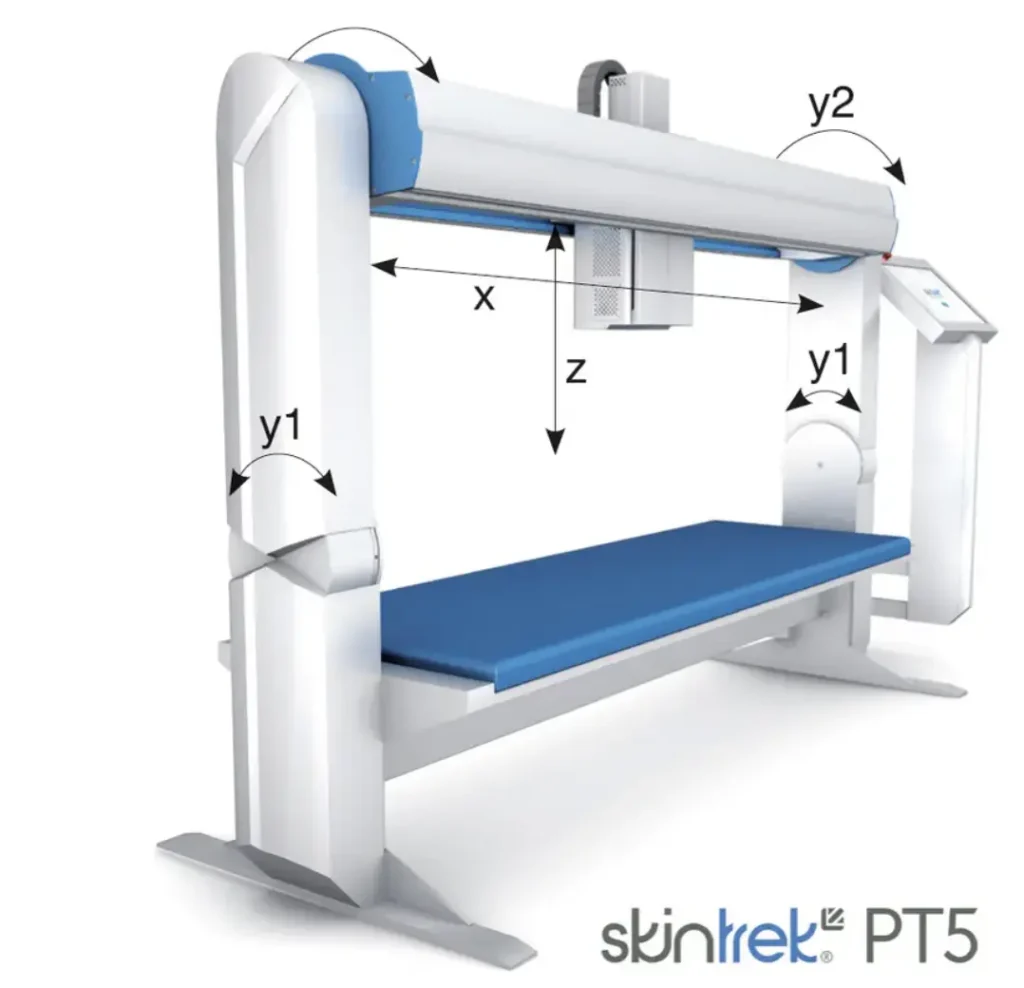
To follow small patient movements in real time, the device must complete multi-dimensional motion control. This includes lamp head swing, irradiation unit height adjustment, horizontal movement, and vertical positioning. The whole system places very high requirements on the stability and precision of drive components.
Core Drive Requirements of Medical Phototherapy Equipment
Medical phototherapy equipment must balance treatment precision, operating safety, and environmental adaptability during actual use. Therefore, the drive system must meet clear and strict requirements.
During operation, the device must maintain high-precision positioning at all times. This ensures that the ultraviolet beam always aligns with the target area. It avoids treatment effects being affected by position deviation. At the same time, the drive components need enough torque output. They must stably drive the lamp head, filter, dimming module, and beam structure to complete different movements.
To ensure safe and reliable treatment, the motor must have position feedback capability. This prevents step loss or inaccurate positioning during movement. Medical environments also have strict limits on equipment noise and vibration. The device must remain quiet and smooth. This provides a comfortable treatment environment for patients.
In addition, medical devices need to support long-time and high-frequency continuous operation. Drive components must have long service life and high stability. They should also use standardized structures. This reduces overall design and modification costs. It also supports fast integration and maintenance.
Why Use a NEMA 23 Hybrid Stepper Motor with Encoder
In the selection of drive solutions for medical phototherapy equipment, a NEMA 23 hybrid stepper motor with encoder offers the best balance among precision, reliability, cost, and ease of use. Therefore, it has become a mainstream choice in the industry.
Compared with brushed DC motors, hybrid stepper motors have clear advantages in positioning accuracy, operating noise, and service life. They are not affected by brush wear. They also do not generate obvious noise.
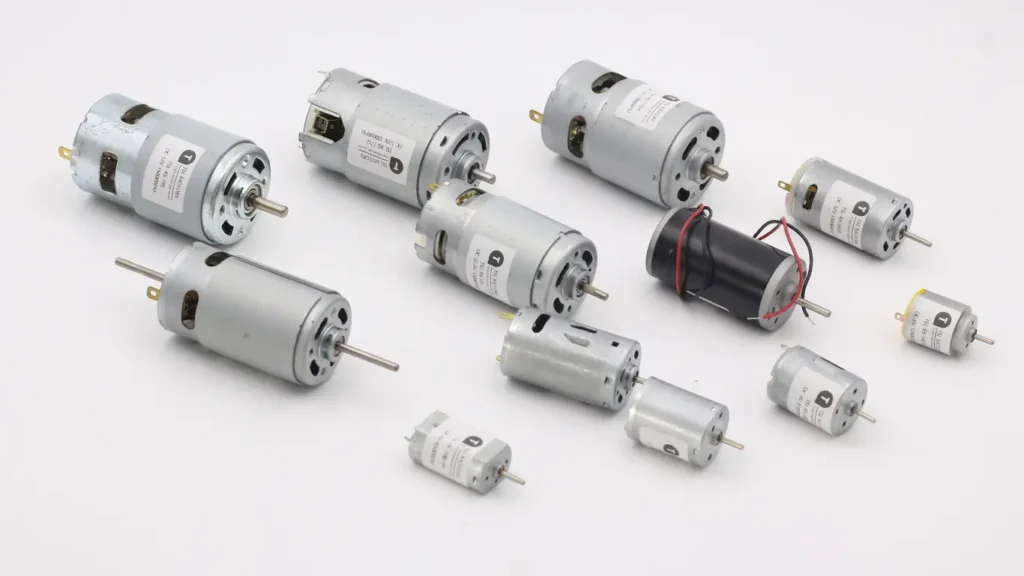
Compared with ordinary open-loop stepper motors, models with encoders can provide real-time position feedback. They can effectively prevent step loss. This greatly improves treatment safety.
Compared with servo motors, NEMA 23 stepper motors have a simpler structure. They are easier to debug. Their cost is more controllable. At the same time, they can meet the torque and positioning requirements of phototherapy equipment.
Overall, a NEMA 23 hybrid stepper motor with encoder offers control precision close to that of a servo motor. It also keeps the advantages of stepper motors, including easy use, stability, and high cost performance. It is very suitable for PT5 medical phototherapy equipment, which requires precise motion control.
| Item | Brushed DC Motor | Ordinary Open-Loop Stepper Motor | Servo Motor | NEMA 23 Stepper Motor with Encoder |
| Positioning Accuracy | Low | Medium | High | High |
| Closed-Loop Feedback | No | No | Yes | Yes |
| Operating Noise | High | Medium | Low | Low |
| Service Life | Short | Long | Long | Long |
| Overall Cost | Low | Medium | High | Moderate |
| Medical Suitability | Not suitable | Average | High cost | Best |
Core Product Advantages of the TSL-57STH4120A4D8EP
The TSL-57STH4120A4D8EP is a 57mm hybrid stepper motor with encoder. It is designed based on the NEMA 23 standard. It is built for high-precision motion control applications. It can fully meet the strict requirements of medical phototherapy equipment.
This motor uses a common industry mounting size. Its structure is highly standardized. It can directly replace similar models. No major modification to the equipment structure is required. This effectively reduces development time and cost.
The motor has a built-in high-precision encoder. It can provide real-time rotor position feedback. This forms closed-loop control. It fundamentally improves the step loss problem of traditional stepper motors. It makes positioning more accurate and operation more stable. The motor also has excellent torque output while keeping a compact size. It can easily drive lamp head swing, beam movement, filter switching, and other loads. It remains smooth and powerful during continuous operation.
The internal structure of the motor is optimized. It has low vibration and low noise. It can adapt to quiet medical environments. At the same time, the product uses high-quality materials and precision manufacturing processes.
It has excellent durability and reliability. It can meet the needs of long-term continuous operation in medical devices. It also has strong compatibility and flexible expansion. It can work well with drivers, gearboxes, and other components.
Typical Applications of the TSL-57STH4120A4D8EP in PT5 Phototherapy Equipment
The TSL-57STH4120A4D8EP drives key multi-axis movements in PT5 phototherapy equipment. It is a core component for precise irradiation.
In lamp head beam swing drive, the motor provides stable torque. It supports precise left-right swing within a certain angle. This allows the irradiation range to cover areas that are normally difficult to reach, such as the sides of limbs. The encoder ensures accurate angle control without deviation.
In irradiation unit height adjustment, the motor drives the related structure to rise and fall smoothly. It can flexibly adjust according to different treatment areas and patient positions. The movement is smooth and free of jamming.
In horizontal movement and vertical positioning, the motor works with linear guides to complete precise positioning. It also works with the image recognition system. This enables real-time tracking of small patient movements.
In addition, the motor can also be used in the filter and spectrum adjustment system. It quickly completes precise positioning and switching. This ensures that the output ultraviolet spectrum meets treatment requirements. It improves treatment targeting and effectiveness.
Customization Services and Technical Support
To meet the diverse needs of medical device manufacturers, we provide full customization services and full-process technical support for the TSL-57STH4120A4D8EP.
Customers can select dedicated drivers according to the overall device design. This forms a complete drive solution. It simplifies system debugging and integration. For mechanical structures, we support output shaft customization. Options include shaft diameter, shaft length, keyway, D-shaped shaft, thread, and other forms. This helps adapt to different transmission structures.
The gearbox can be flexibly selected according to actual load and speed requirements. Material selection and reduction ratio customization are also supported. This meets torque amplification needs in different scenarios. For the electrical part, lead-wire length, wiring method, and connector type can be customized. This makes wiring more standardized and installation easier.
For the use environment of medical devices, we can also upgrade the motor’s waterproof and dustproof rating. This improves device stability in cleaning, disinfection, humid, and other environments.
From early model selection and solution evaluation to installation debugging, batch application, and maintenance, we provide full technical support. This helps customers shorten the development cycle and improve product implementation efficiency.
Industry Trends and Future Outlook
As precision medicine and digital treatment technologies continue to advance, medical phototherapy equipment is developing toward greater intelligence, higher precision, and better safety.
Pixelated irradiation, dynamic human body tracking, automatic dose calibration, and non-invasive treatment are gradually becoming standard industry functions. Equipment requirements for drive system precision, response speed, quiet operation, and reliability continue to rise.
In the future, integrated drives, closed-loop intelligent control, miniaturization, and high power density will become important development directions in medical motion control.
We will continue to focus on technology upgrades in the medical drive field. We will keep optimizing the integration performance of motors and encoders. We will improve product performance in precision, quietness, stability, and intelligence. We will launch drive solutions that better match next-generation phototherapy equipment. This will provide continuous power for the development of precision medicine.
Conclusion
The TSL-57STH4120A4D8EP NEMA 23 stepper motor with encoder offers precise positioning, high torque output, closed-loop stability, quiet and durable operation, and easy integration. It can perfectly match the multi-axis motion control needs of PT5 digital phototherapy equipment.
While ensuring treatment precision and use safety, it effectively reduces equipment development and maintenance costs. It is an ideal drive choice for medical phototherapy equipment.
As digital phototherapy technology becomes more widely used, we will continue to focus on the professional drive field. With a mature product system, flexible customization services, and reliable technical capabilities, we will work with medical device manufacturers to promote industry innovation. We will provide stable support for more efficient, safer, and smarter dermatology treatment.
FAQ
Q1:Why does PT5 phototherapy equipment need a motor with an encoder?
Digital phototherapy targets specific diseased skin areas while sparing healthy tissue. The encoder provides real-time position feedback to prevent “step loss,” ensuring the ultraviolet beam remains perfectly aligned with the treatment area.
Q2:Can this motor handle small patient movements during treatment?
Yes. The motor works with image recognition systems to complete horizontal and vertical positioning in real time. This allows the irradiation unit to track small patient movements smoothly without jamming.
Q3:How does the motor contribute to patient comfort?
Medical environments require quiet operation. The internal structure of this NEMA 23 motor is optimized for low vibration and low noise, ensuring a quiet and comfortable treatment environment for patients.