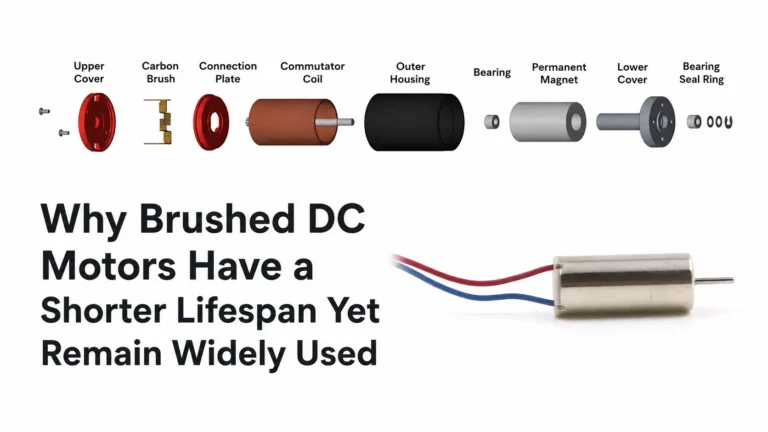
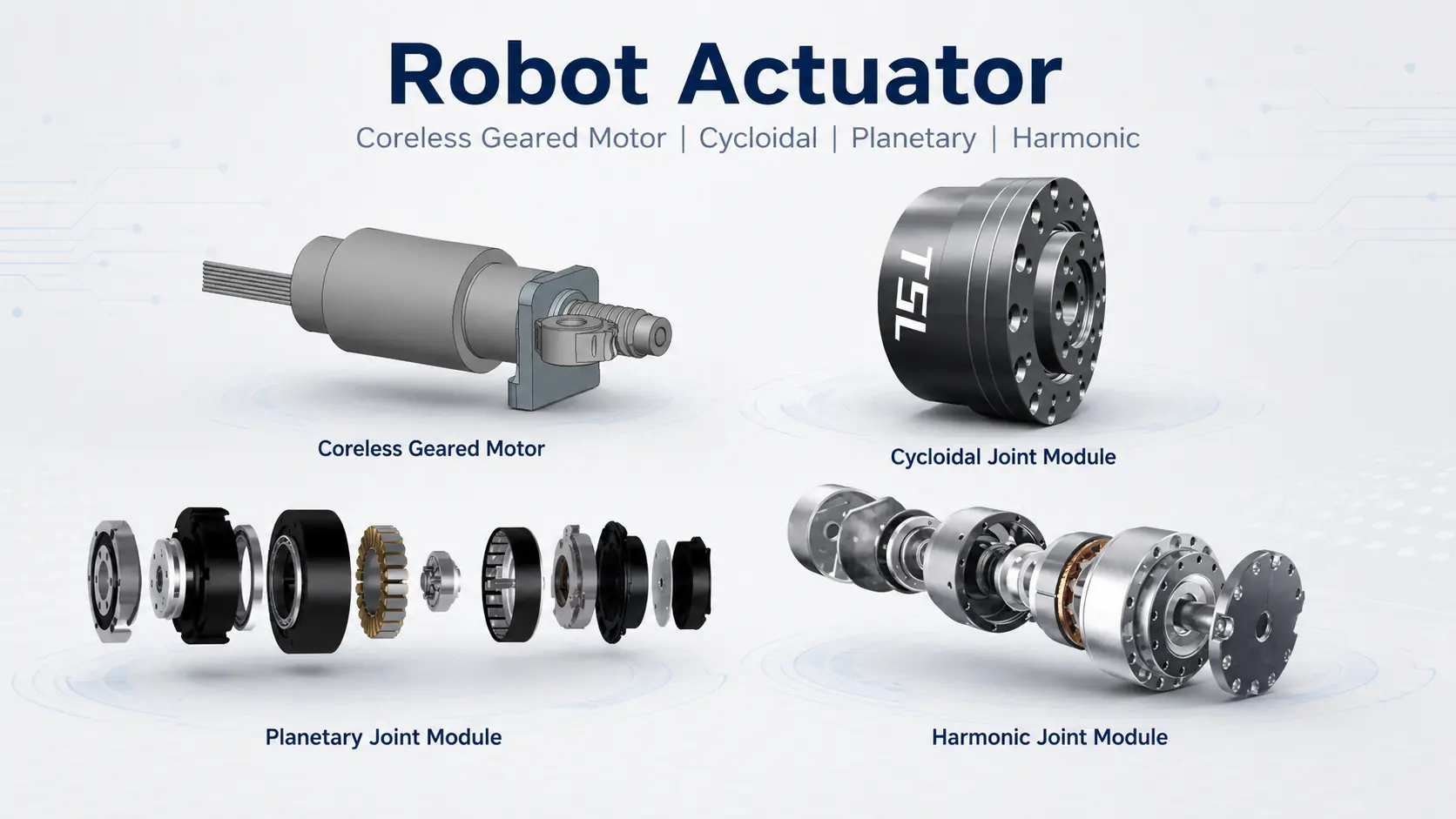

A robot actuator is the core transmission component in a robot that converts electrical energy into mechanical energy, acting as the robot’s dynamic joint. It directly determines the payload capacity, repeat positioning accuracy, and operational smoothness of the equipment.
Currently, electric actuators are universally adopted in robotics, while hydraulic and pneumatic solutions are restricted to niche or specialized operating conditions. Electric drives have become the primary choice across the industry due to their ease of integration, fast response, precise control, and simple maintenance.
TSL MOTOR provides a complete supply of various robot actuation mechanisms: including high-precision harmonic, cycloidal, and planetary integrated joint modules for large joints, as well as coreless gear motors, lead screws, worm gears, and tendon-driven accessories for dexterous hands.
Harmonic joint modules, planetary joint modules, and coreless gear motors are available for direct online procurement, providing modular drive solutions for complete-machine manufacturers and global makers alike.
| Actuator Type | Typical Application Location |
| Harmonic Joint Module | Wrist, Forearm, Hand |
| Cycloidal Joint Module | Waist, Hip, Leg |
| Planetary Joint Module | Hand, Wrist |
| Coreless Gear Motor | Dexterous Fingers, Micro Joints |
| Frameless Torque Motor | Shoulder, Elbow, Hip, Ankle |
| Planetary Roller Screw | Knee, Elbow Telescopic Structures |
| Worm Gear | Equipment Lifting Mechanisms, Heavy-Duty Self-Locking Structures |
| Planetary Roller Actuator/Push Rod | Humanoid Robot Legs, Knees |
| Tendon-Driven (Cable-Driven) | Dexterous Hands, Flexible Drive Structures |
| Linear Actuator | Joint Extension/Retraction, Cantilevers, Linear Motion Platforms |
Key Takeaways
- Robot actuators convert electrical energy into mechanical motion.
- Actuator performance directly affects robot precision and stability.
- Harmonic actuators are ideal for compact, high-precision joints.
- Cycloidal actuators are suitable for heavy-load robotic joints.
- Planetary actuators balance compact size, performance, and cost.
- Coreless geared motors are widely used in dexterous robotic hands.
- Linear actuators provide controlled pushing and pulling movements.
- Actuator selection depends on torque, speed, size, and accuracy.
Harmonic Joint Module
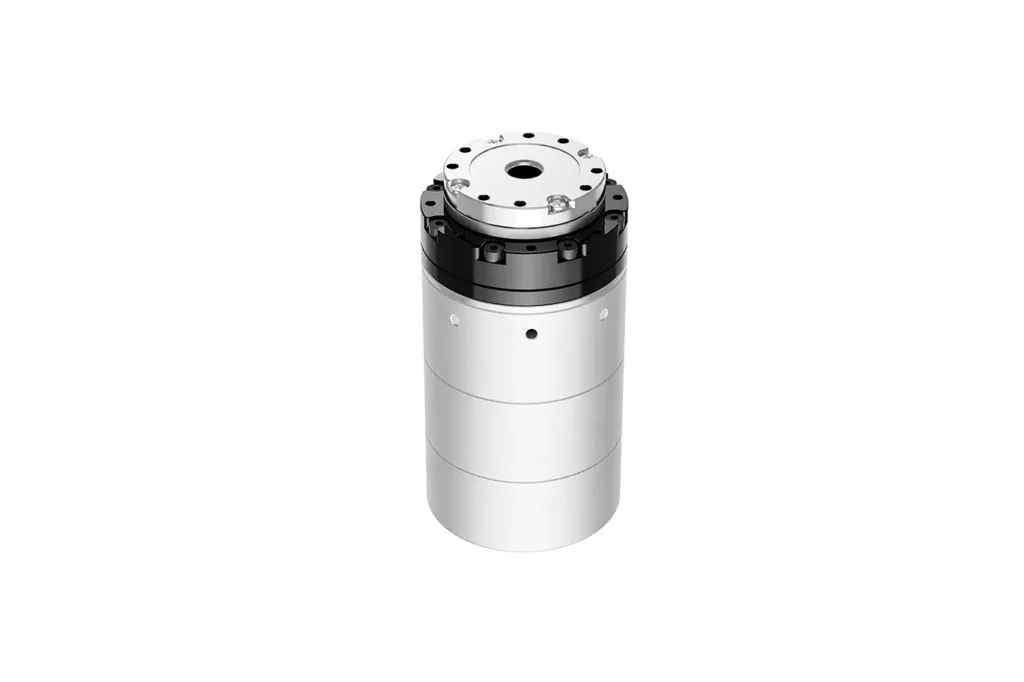
Precise, light-load rotational joints in humanoid robots demand strict control over positioning accuracy and compact sizing. Featuring high precision, zero backlash, and miniaturization, harmonic joint modules are the core choice for these scenarios.
Principle and Structure
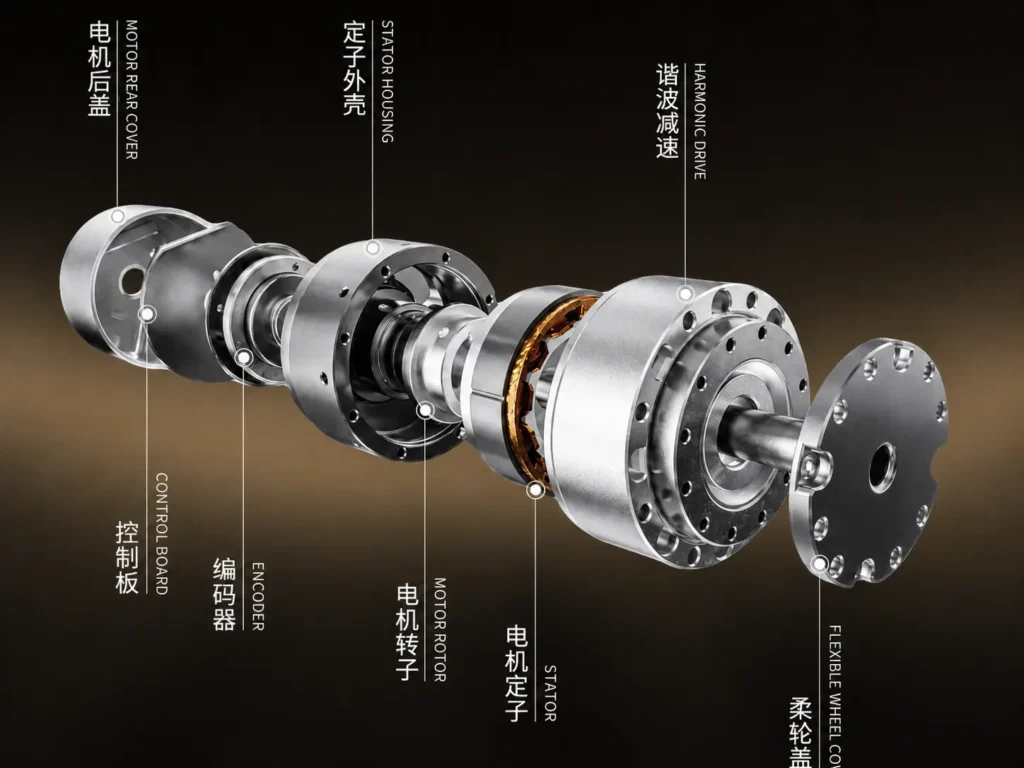
The core of a harmonic reducer consists of three major components: a circular spline, a flexspline, and a wave generator. Unlike traditional rigid gear meshing, power transmission relies on the controlled elastic deformation of the flexspline. Its specialized deformation-meshing structure achieves ultra-large reduction ratios.
Furthermore, the simultaneous multi-tooth meshing characteristic significantly eliminates transmission backlash, offering excellent repeat positioning accuracy—making it a core transmission component for precision rotational joints.
Pros and Cons
Harmonic joint modules display distinct performance features tailored to precision, light-load scenarios:
- Pros: Small size, excellent lightweight effect; extremely large single-stage reduction ratio; virtually zero backlash with exceptionally high positioning accuracy; smooth operation suited for high-precision micro-manipulations.
- Cons: Long-term elastic deformation makes the flexspline prone to fatigue aging, resulting in weak impact resistance; complex manufacturing and calibration processes lead to high production costs; friction from flexibility yields mediocre transmission efficiency, making it unsuitable for continuous, long-term heavy-load operations.
Typical Applications and Parameters
Currently widely applied in precision motion areas such as robotic arm small joints and dexterous fingers. The dominant industry solution combines a frameless torque motor with a harmonic reducer. Multi-dimensional precision rotational joints in the shoulders and wrists of humanoid robots like Tesla Optimus adopt this combination, achieving superior accuracy and flexibility.
- Transmission Ratio: Single-stage can reach 50–300x
- Output Torque: Up to dozens of N·m (depending on model adaptation)
- Positioning Accuracy: Better than 1 arcminute
Cycloidal Joint Module (RV Reducer)
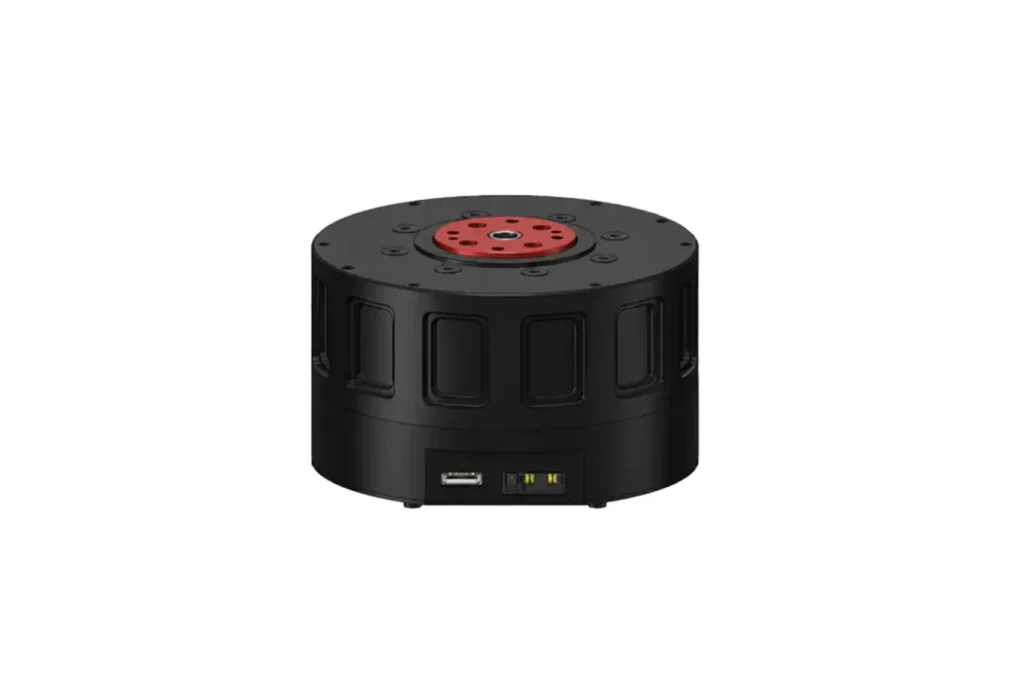
Lower-limb joints in robots carry heavy loads and require high rigidity to withstand frequent load-bearing and impact conditions. Cycloidal joint modules balance heavy-load capability with structural stiffness, making them the preferred choice for high-load joints.
Principle and Structure
The cycloidal pinwheel reducer (the core category of RV reducers) consists of an input shaft, an eccentric sleeve, a cycloidal gear, and a pinwheel. The motor drives the input shaft, which through the eccentric sleeve drives the cycloidal gear to perform eccentric circular motion.
The cycloidal gear meshes precisely with the pinwheel, outputting power at a large reduction ratio based on the tooth count difference. It serves as a core transmission structure for heavy-duty, high-precision joints, with overall structural rigidity far superior to harmonic transmissions.
Pros and Cons
- Pros: High structural rigidity, high load-bearing capacity, superior impact resistance; outputs stronger torque compared to harmonic reducers and provides better accuracy/stability compared to standard planetary reducers; compact size, low operating noise, long service life.
- Cons: Complex internal component structure; extremely high demands on tooth profile machining, heat treatment, and assembly precision; processing costs are far higher than conventional planetary reducers, setting a high threshold for mass production.
Typical Applications and Parameters
Mainly adapted to core heavy-load, high-rigidity joint requirements in humanoid robots such as the waist, hips, and legs, making it the preferred solution for lower-limb load-bearing joints. It is expected to become the mainstream transmission configuration for high-load humanoid robot joints in the future.
- Transmission Ratio: Single-stage can reach 30–300+
- Characteristic Advantages: Simultaneous multi-tooth meshing, wide reduction ratio range, high load-bearing limit
Planetary Joint Module
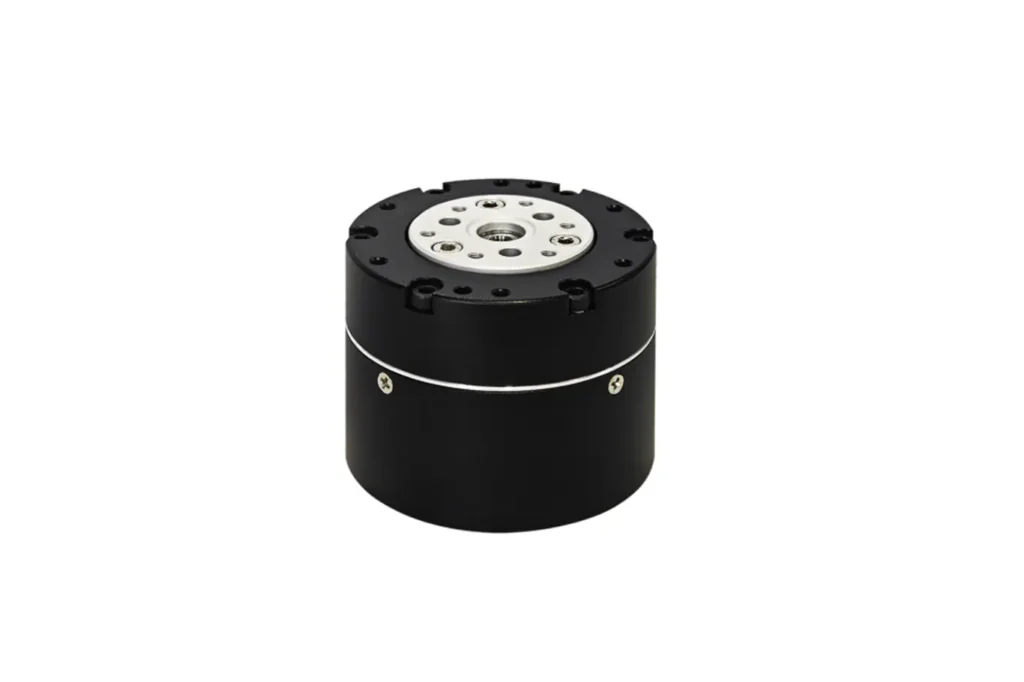
Forearms and hands in robots mostly consist of light-load joints that prioritize lightweight design and cost-effectiveness. Planetary joint modules offer a simple structure and controllable costs, fitting various medium-to-low precision driving scenarios.
Principle and Structure
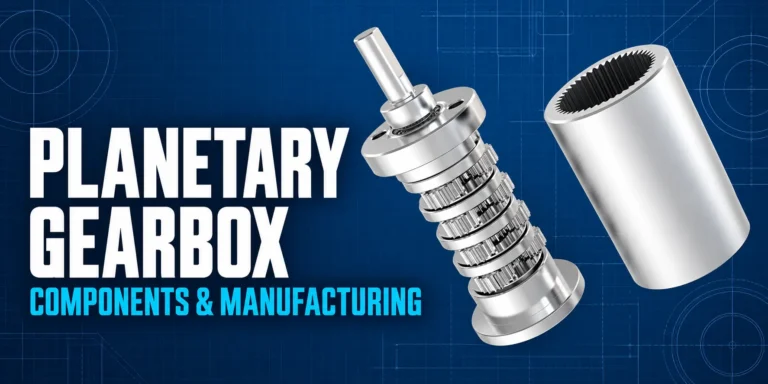
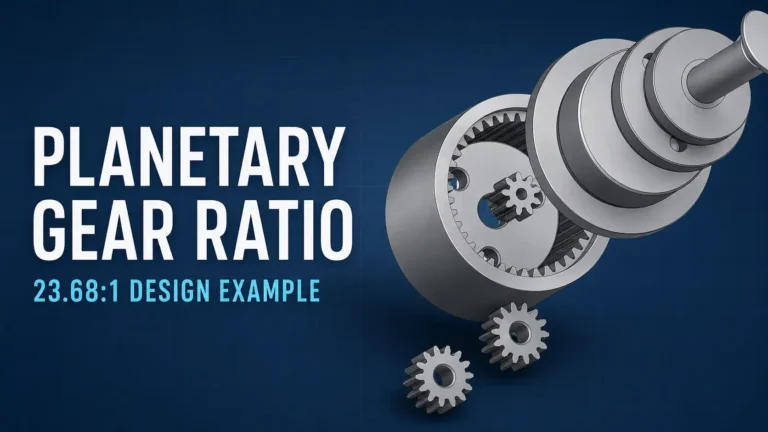
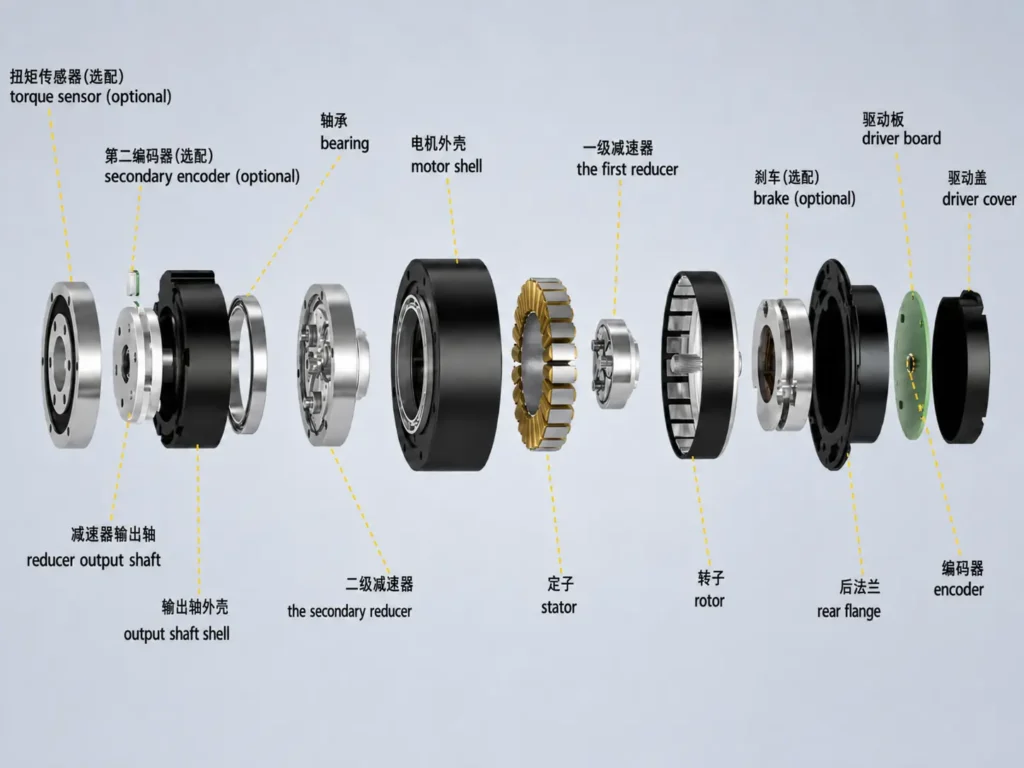
Precision planetary reducers employ a classic planetary transmission structure consisting of a sun gear, multiple sets of planetary gears, and an internal ring gear. Motor power enters via the sun gear.
The planetary gears rotate around their own axes and revolve around the sun gear, evenly aggregating torque before outputting it. The overall structure is symmetrical and compact, featuring balanced operation and low assembly/maintenance difficulty.
Pros and Cons
- Pros: Simple structure, lightweight, easy integration; low mass-production cost, high cost-effectiveness; smooth operation, strong adaptability.
- Cons: Transmission accuracy and structural rigidity are weaker than harmonic and cycloidal structures; larger backlash renders it unsuitable for ultra-high precision operations.
Typical Applications and Parameters
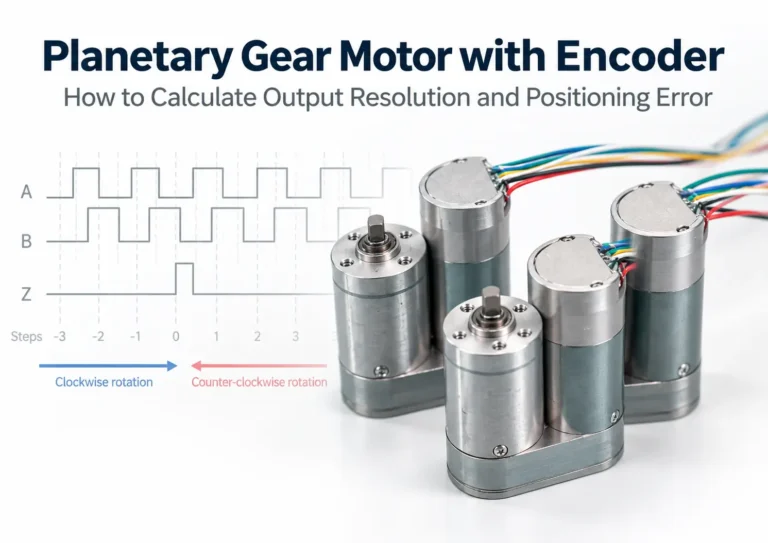
Widely applied in light-load joints such as hands, forearms, and conventional dexterous fingers, serving as a core configuration for low-cost, lightweight robots. Most domestic humanoid robots in China utilize planetary reducer solutions for hand actuation. TSL MOTOR’s TSL-GIM4315-40 metal planetary gear motor is adapted to precision drive scenarios for various small robots.
- Transmission Ratio: 40:1
- Output Torque: Up to 45.41 N·m
- Product Features: Metal gears, high torque, long service life
Coreless Gear Motor (Micro Ironless Motor)
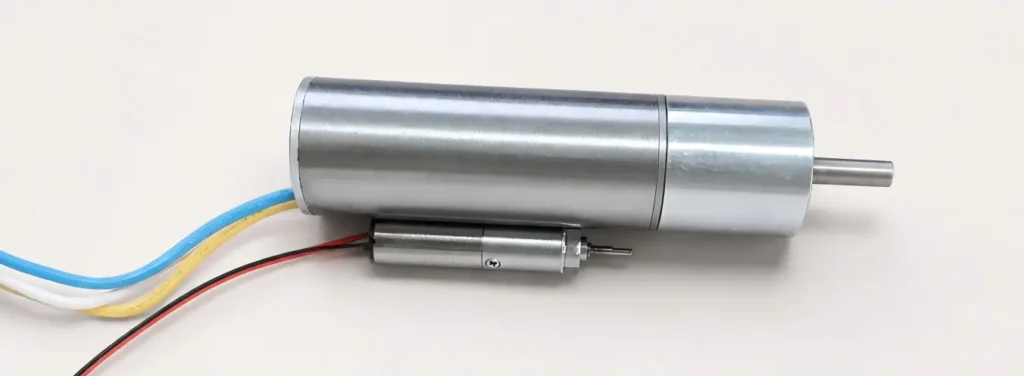
Humanoid dexterous hands require compact dimensions and agile movements, demanding extreme lightweighting and rapid response times from driving components. Coreless gear motors perfectly meet the actuation needs of micro precision joints.
Principle and Structure
Coreless motors are ironless micro DC motors that abandon the traditional iron core structure, completely eliminating eddy current losses, hysteresis losses, and redundant structural weight.
The ironless hollow-winding design significantly reduces the rotor’s moment of inertia, dramatically improving dynamic response speed and operating efficiency, acting as a core device for micro precision actuation.
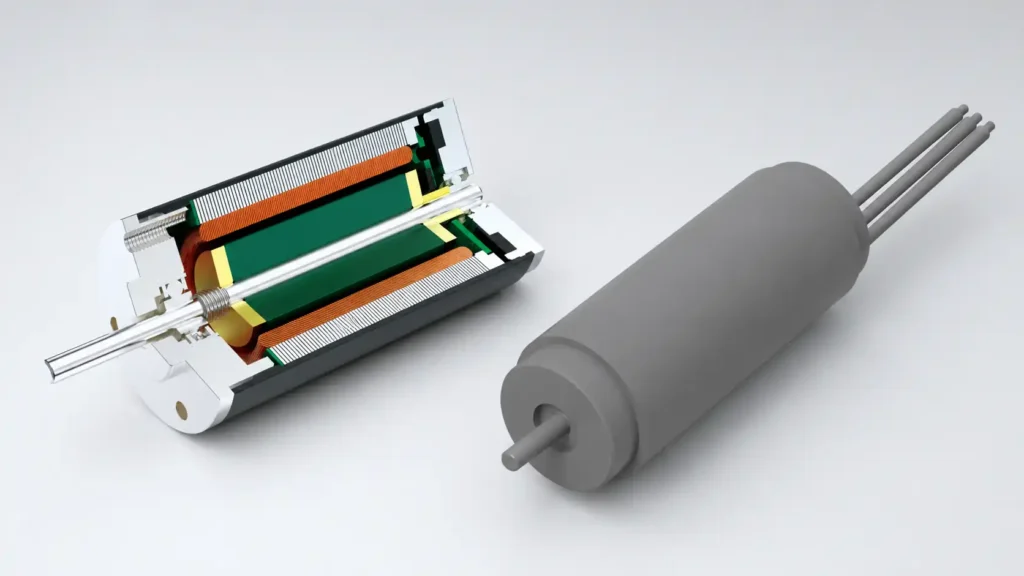
Based on magnetic field structure, they are divided into brushed and brushless types: brushed models fit multi-turn low-speed scenarios, while brushless models are mostly used in high-speed, light-load conditions.
Pros and Cons
- Pros: Micro size, extremely lightweight; fast dynamic response, high acceleration, high operating efficiency; torque density far surpasses traditional iron-core motors, fitting high-speed micro-manipulation scenarios.
- Cons: Constrained by size, absolute output torque is limited; winding process is complex, resulting in higher manufacturing difficulty.
Typical Applications and Parameters
It is the core actuation component for humanoid robot dexterous hands, providing core support for the miniaturization and high flexibility of dexterous hands. TSL MOTOR is deeply engaged in dedicated coreless gear motors for robot fingers.
- Conventional Size: 10–30 mm
- Output Torque: From several dozen mN·m to a few N·m
- Applicable Scenarios: Dexterous fingers, micro precision joints
Frameless Torque Motor
Large rotational joints in robots require power support characterized by high torque and high integration. Frameless torque motors discard redundant structures to deliver outstanding torque density, making them the core power source for high-end joints.
Principle and Structure
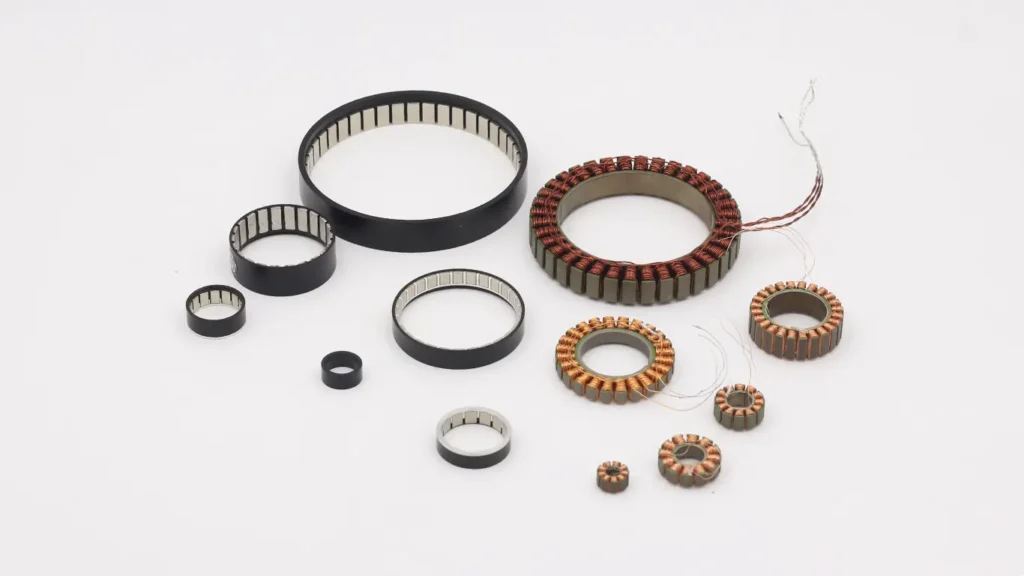
A frameless torque motor is an integrated direct-drive motor structure that retains only the stator coils and permanent magnet rotor, removing traditional motor housings, bearings, output shafts, and other redundant structures. Lacking an independent support frame, it can be embedded directly inside the robot joint, offering a highly integrated, lightweight, high-end power solution.
Pros and Cons
- Pros: Small volume, lightweight, extremely high torque density; smooth output at low speeds and high torque; housing-free structure allows better heat dissipation, suitable for long-term continuous operation; deep integration drastically optimizes joint volume.
- Cons: Relatively high product cost; strict requirements for drive matching and thermal design; domestic mass-production technology for high-end products is continuously iterating to catch up.
Typical Applications and Parameters
Extremely versatile for various rotational joints in humanoid robots—it can be used alone for direct drive, or combined with harmonic or planetary reducers to cover major joints such as shoulders, elbows, hips, and ankles, as well as small wrist joints.
- Operating Characteristics: Low rated speed, abundant low-speed torque
- Output Torque: Up to dozens of N·m or more
- Industry Trend: By 2030, a single humanoid robot will generally carry multiple frameless torque motors.
Planetary Roller Screw
Linear telescopic joints in robots must endure heavy loads and repeated impacts, requiring extremely high load capacity and service life. The performance of planetary roller screws far exceeds that of traditional lead screws, making them the mainstream solution for high-end linear joints.
Principle and Structure
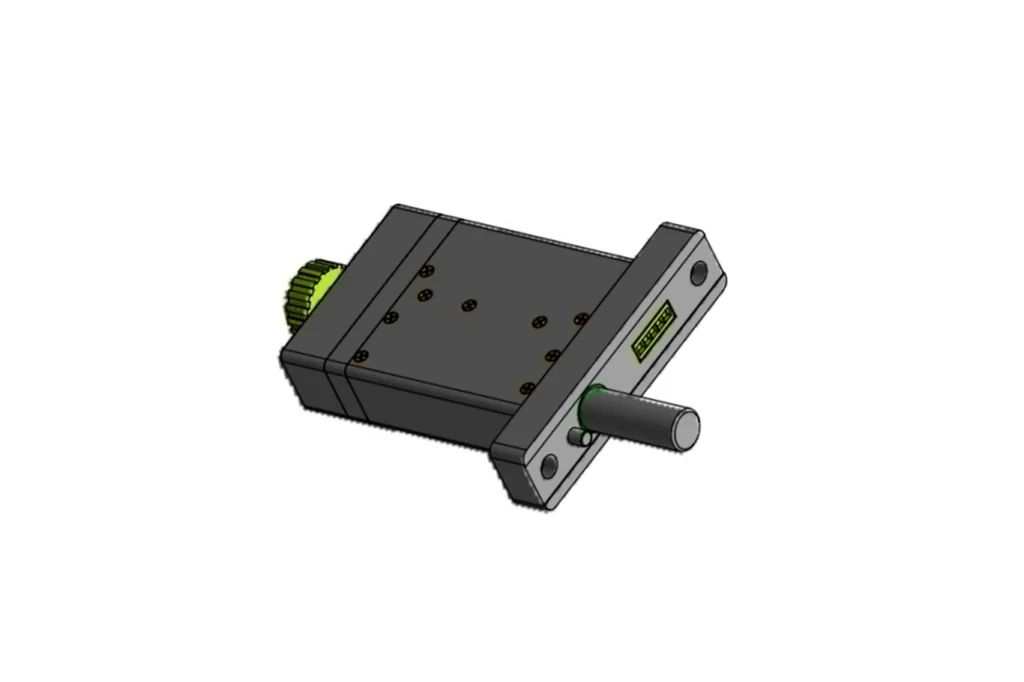
The core of a planetary roller screw comprises a screw shaft, a nut, and threaded rollers. During operation, the rollers rotate on their own axes while revolving around the screw nut’s axis, converting the motor’s rotary torque into linear motion of the screw shaft via multi-point meshing.
Among them, the inverted structure uses the nut as the active input, enabling integrated fusion between the motor and the screw shaft, significantly compressing installation space and raising integration.
Pros and Cons
- Pros: Multi-point meshing structure delivers load-bearing capacity, rigidity, and impact resistance far exceeding ball screws; low friction loss, high transmission efficiency, long service life; exceptional stability under high-frequency reciprocating conditions.
- Cons: Machining and pairing/assembly processes for high-precision rollers are complex; high manufacturing costs impose technical barriers to domestic high-end mass production.
Typical Applications and Parameters
It has become the premier choice for linear joints in humanoid robots, widely used in heavy-load telescopic joints such as knees and elbows. A single Tesla Optimus unit incorporates 14 inverted planetary roller screws as linear actuators, with the value of the screws accounting for nearly 20% of the entire machine.
- Minimum Lead: 0.3 mm and above, enabling fine micro-control
- Application Trend: Gradually penetrating from lower-limb heavy-load joints into arm linear structures.
Worm Gear
Certain auxiliary structures in robots require direction changes, self-locking, and stable heavy-load support. Worm gears are compact and feature inherent self-locking, making them suitable for low-speed static transmission scenarios.
Principle and Structure
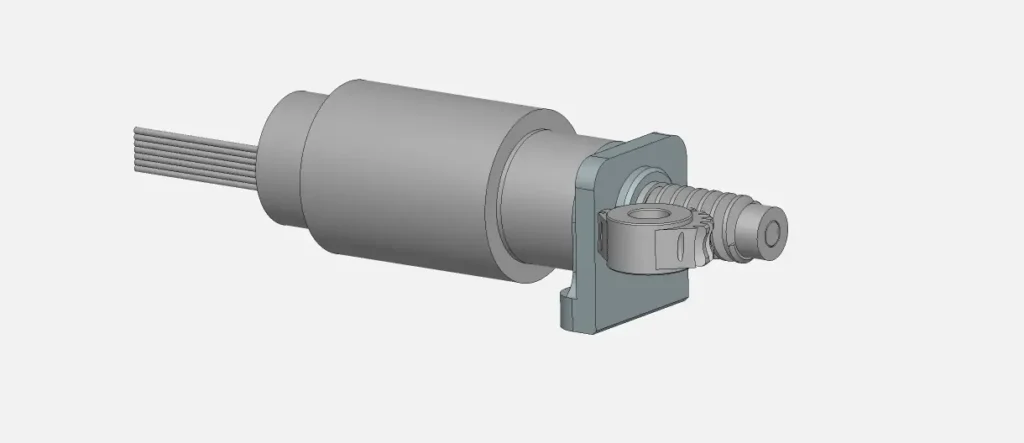
A worm gear is a 90° crossed-axis transmission structure composed of a paired worm and worm wheel. With the worm as the active input and the worm wheel as the passive output, it quickly changes the transmission direction and achieves high reduction ratios in a layout suited for narrow installation spaces.
Pros and Cons
- Pros: Compact structure with minimal space occupancy; large single-stage reduction ratio (up to 1:120); smooth operation with low vibration and noise; features reverse self-locking capability to prevent load reversal.
- Cons: High friction loss leads to operational heat generation; transmission efficiency is only 30%–90%, making it unsuitable for high-speed, high-frequency dynamic motion.
Typical Applications
Mostly used in lifting mechanisms, steering mechanisms, and heavy-duty self-locking structures of industrial automation equipment and humanoid robots. Unsuited for high-speed dynamic joints, it serves primarily as an auxiliary transmission and fixed supporting component.
Tendon-Driven (Cable-Driven) Scheme
Built-in motors easily increase joint inertia in dexterous hands, impairing movement flexibility. Tendon-driven schemes utilize remote actuation to effectively reduce weight and optimize dynamic performance.
Principle and Structure
Tendon-driven mechanisms are flexible remote actuation structures that use steel wire ropes or synchronous belts as power transmission media. Through pulley and belt systems, motor power is remotely transmitted to the target joint. Bionically mimicking human tendon traction principles, power components can be flexibly placed.
Pros and Cons
- Pros: External placement of motors greatly reduces joint self-weight and moving inertia; flexible structure and high space utilization enhance the robot’s dynamic response; meets lightweight design requirements.
- Cons: Long-term operation causes cables to stretch and deform, requiring tension maintenance structures; friction and clearance slightly reduce transmission accuracy, making it unsuitable for ultra-high precision, high-torque conditions.
Typical Applications
Mainly applied in humanoid robot dexterous hands and various flexible remote drive structures. Domestic manufacturers in China have utilized an axial flux motor + tendon-driven scheme to successfully create a 23-DOF lightweight dexterous hand, significantly optimizing hand load capacity and movement flexibility.
Linear Actuator
Various linear movements in humanoid robots rely on dedicated linear actuators for power conversion. Performance varies noticeably across different linear actuator types to suit diverse operating conditions.
Principle and Structure
Linear actuators are general-purpose components that convert motor rotary motion into linear motion. Mainstream types include ball screw drives, integrated electric push rods, and pneumatic/hydraulic cylinders. Ball screws rely on circulating ball bearings for precision linear transmission; electric push rods integrate the motor and screw into a single structure for easy installation; pneumatic/hydraulic cylinders push pistons via fluid pressure to complete linear motion.
Pros and Cons Comparison
- Ball Screw: High precision, good transmission efficiency; however, high static starting friction, weak impact resistance, lack of self-locking capability, and poor resistance to repeated impact loads.
- Electric Push Rod: High integration, convenient installation, strong adaptability; overall volume is on the larger side, with average precision control performance.
- Pneumatic / Hydraulic Cylinder: Fast response speed; however, bulky equipment volume, high system energy consumption, limited control accuracy.
- Planetary Roller Screw Linear Actuator: Optimal overall performance—strong load capacity, high rigidity, impact resistance, and long life—making it the best solution for linear joints in humanoid robots.
Typical Applications
Widely used in robot joint extension/retraction, cantilever transmissions, linear motion platforms, and other scenarios. Selection can be flexibly adjusted based on installation space, load size, and accuracy requirements.
Actuator Quantities and Configuration Examples in Mainstream Humanoid Robots
Humanoid robots accomplish complete actions through co-ordinated multi-DOF movements, with the machine consisting of multiple actuator groups. Actuator counts and configuration schemes vary significantly across different models.
Manufacturers adopt different configurations based on product positioning—ranging from pure rotary drive, hybrid rotary + linear drive, to hydraulic drive schemes. Below is a summary of publicly disclosed configurations for mainstream models:
Selection Conclusion and Application Recommendations
Actuator selection for robots must comprehensively weigh load, precision, and cost to match the appropriate transmission scheme. Rational selection significantly enhances robotic motion performance and cost-effectiveness.
- Upper-Limb Precision Rotational Joints: For high precision and light-load requirements, harmonic joint modules should be prioritized.
- Lower-Limb Heavy-Load Joints: For high-stress joints in the waist, hips, and legs, cycloidal joint modules should be prioritized to guarantee rigidity and load capacity.
- Cost-Sensitive Small Hand Joints: Simple, cost-effective planetary joint modules can be selected.
From a core power standpoint, frameless torque motors represent the core configuration for high-end humanoid robots; paired with different reducers, they adapt to various rotational joints. For linear joints, planetary roller screw structures are preferred to boost overall impact resistance and service life. For lightweight dexterous hand solutions, coreless gear motors paired with tendon-driven structures can be adopted.
As the domestic precision transmission industry rapidly matures, TSL MOTOR provides a one-stop supply of full-series robot drive products—including harmonic joint modules, planetary joint modules, and coreless gear motors—available for direct online procurement. Standardized modular products can drastically reduce robot R&D integration complexity, shorten project delivery cycles, and fulfill develop
Conclusion
A robot actuator is a core component that directly affects a robot’s load capacity, positioning accuracy, response speed, and operating stability. Different joints require different actuator solutions based on torque, installation space, precision, impact resistance, and cost.
Harmonic joint modules are suitable for compact and high-precision rotary joints, while cycloidal joint modules are better for heavily loaded areas such as the waist, hips, and legs. Planetary joint modules provide a practical balance between performance and cost.
Coreless geared motors are commonly used in dexterous hands and miniature joints, while planetary roller screw actuators are ideal for high-load linear joints.
TSL MOTOR supplies harmonic joint modules, planetary joint modules, frameless torque motors, coreless geared motors, and multiple linear actuator solutions. Selected standard products are available for direct online purchase, helping robot manufacturers shorten product selection, testing, and integration cycles.
FAQ
1. What is a robot actuator?
A robot actuator converts electrical energy into rotary or linear mechanical motion. It functions as the power source for robotic joints.
2. What types of actuators are used in robotics?
Common types include harmonic joint modules, cycloidal joint modules, planetary joint modules, frameless torque motors, coreless geared motors, and robotic linear actuators.
3. Which actuator is suitable for a robotic arm?
Large shoulder and elbow joints commonly use frameless torque motors combined with harmonic, cycloidal, or planetary gearboxes. Smaller wrist and forearm joints can use compact harmonic or planetary joint modules.
4. What motor is commonly used in a dexterous robotic hand?
Dexterous robotic hands commonly use coreless geared motors. They can also be combined with lead screws, planetary roller screws, worm gears, or tendon-driven transmission systems.