
Global medical drug delivery devices are developing rapidly toward miniaturization, precision, automation, and portability. Multi-setting fixed-dose electronic injectors offer accurate dosing, easy operation, and reusable use.
They are now widely used in chronic disease management, home care, clinical emergency treatment, pet healthcare, and other scenarios. They have become core execution devices for precise drug delivery.
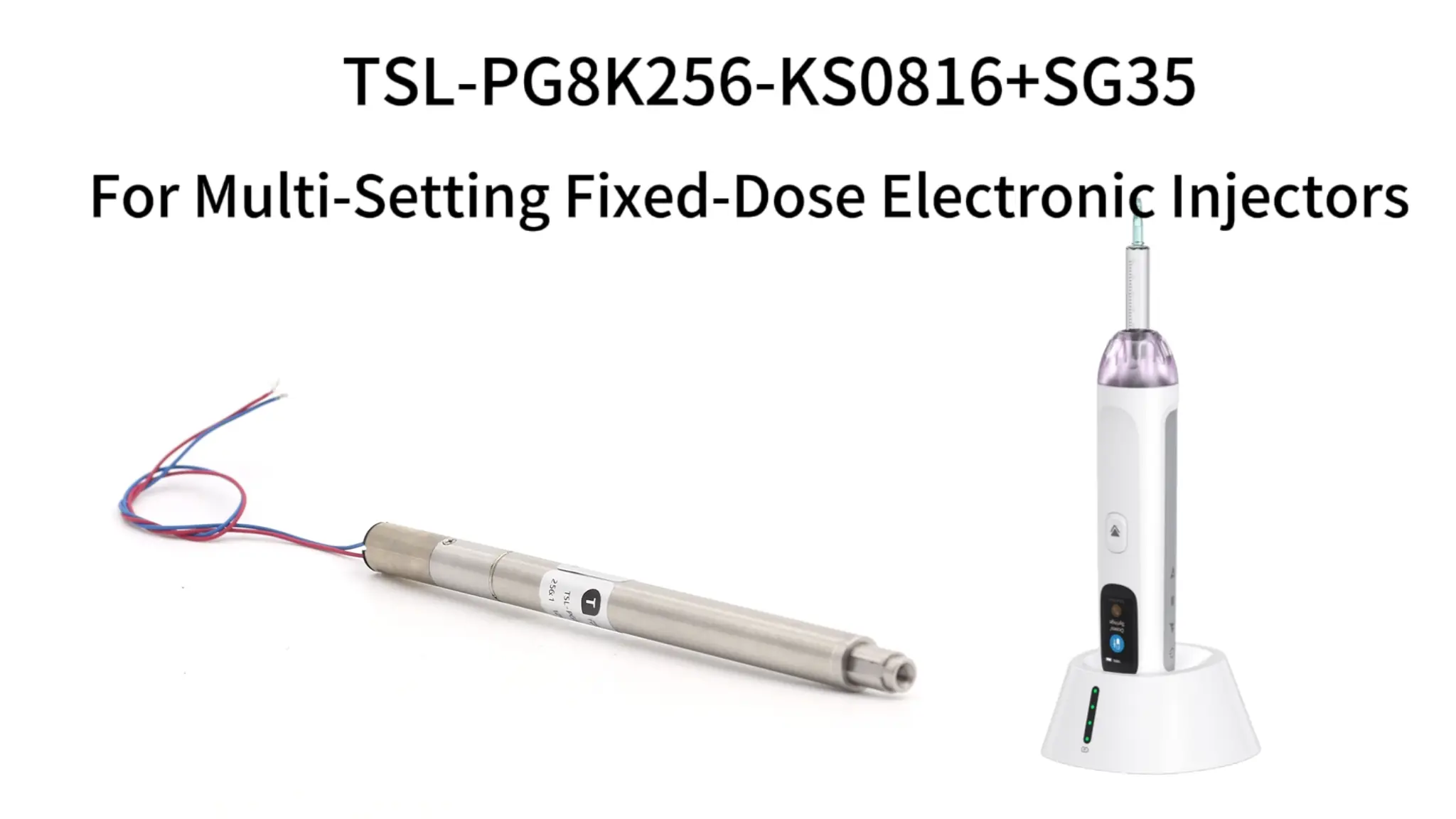
The PG8K256-KS0816+SG35 8mm coreless electric linear actuator features an ultra-small size, high-precision linear output, stable thrust, and high integration. It perfectly matches the drive requirements of multi-setting fixed-dose electronic injectors. It provides a mature and reliable miniature linear drive solution for global medical drug delivery devices.
Key Takeaways
- The PG8K256-KS0816+SG35 actuator achieves ultra-miniaturization through its integrated coreless design.
- Multi-setting electronic injectors utilize this actuator to achieve precise and controllable drug dosages.
- The integrated lead screw directly converts rotary motion into stable linear thrust for pushing the syringe piston.
- All-steel planetary gears ensure long-term reliability and a high service life for medical use.
- Self-locking capabilities prevent drug leakage or dose drift when the device is in standby mode.
- High-efficiency power management supports the portability and longevity of battery-operated injectors.
- Comprehensive customization services allow for tailored thrust, stroke, and mechanical interfaces to meet specific medical standards.
Working Principle of Multi-Setting Fixed-Dose Electronic Injectors
The PG8K256-KS0816+SG35 8mm coreless electric linear actuator features an ultra-small size, high-precision linear output, stable thrust, and high integration. It perfectly matches the drive requirements of multi-setting fixed-dose electronic injectors. It provides a mature and reliable miniature linear drive solution for global medical drug delivery devices.
The complete working process is as follows:
The user selects the target dose setting through the operation interface. For example, 0.5, 1.0, or 1.5 units.
The main control system receives the command. It drives the miniature linear actuator to move.
The actuator pushes the syringe piston with stable speed and thrust. It completes quantitative liquid delivery.
After reaching the set displacement, the system stops. One dose is completed.
The system can repeat multi-setting operations. It supports continuous, stable, and consistent drug delivery.
The whole device uses electronic control and precision transmission to replace traditional mechanical structures. It realizes controllable dosage, smooth motion, and safe use. Its core depends on the miniature drive unit to convert rotary motion into stable linear motion.
Role of the Electric Linear Actuator in Multi-Setting Fixed-Dose Electronic Injectors
The electric linear actuator pushes the syringe piston. It completes quantitative drug delivery. Different dose settings are adjusted by precise control of push speed and displacement. This ensures consistent output and controlled error for each dose setting.
During this process, drugs with different viscosities require different thrust levels. The actuator must provide stable and continuous thrust. When power is off or the device is in standby mode, the motor can hold the piston position. This prevents drug leakage, self-flow, or dose drift.
Therefore, the electric linear actuator is the key core component that enables automation, precision, and portability in electronic injectors.
Core Requirements of Multi-Setting Fixed-Dose Electronic Injectors for Drive Motors
Multi-setting fixed-dose electronic injectors are medical-grade devices. They require high safety and high stability. They place strict requirements on drive motors:
Ultra-miniaturization: it must fit the narrow space of pen-type and handheld devices. An 8mm outer diameter is preferred.
High-precision linear output: displacement repeatability must be high. This ensures consistent dosing across multiple settings.
Stable and sufficient thrust: it must push different drugs. Thrust must not decline clearly during long-term operation.
Low noise and low vibration: it must meet the needs of quiet environments, such as hospitals and homes.
High efficiency and low power consumption: it must support battery-powered devices. It helps improve battery life for portable equipment.
Wide-temperature reliability: it must adapt to storage, transportation, clinical use, and different global environments.
Long service life and high stability: it must support tens of thousands of repeated starts and stops. The failure rate must be extremely low.
High integration and easy assembly: it must simplify the whole device structure. It must reduce mass production difficulty and maintenance costs.
Why Choose an 8mm Miniature Coreless Electric Linear Actuator
In multi-setting fixed-dose electronic injector applications, the 8mm coreless electric linear actuator has irreplaceable advantages. It performs better than ordinary brushed DC motors, stepper motors, ordinary gear motors, spring drives, and other solutions.
| Comparison Dimension | Ordinary Brushed DC Motor | Stepper Motor | Ordinary Gear Motor | Spring / Electromagnetic Drive | 8mm Miniature Coreless Electric Linear Actuator |
| Structural Integration | Low. It needs external reduction, screw, and guide parts. | Medium. It needs external drive and transmission parts. | Medium. It needs extra modification for linear motion. | High. It is a pure mechanical structure. | Extremely high. It provides integrated linear output. |
| Space Occupation | Large. It is difficult to miniaturize. | Relatively large. It is not suitable for pen-type devices. | Relatively large. It requires more assembly space. | Small. | Ultra-small 8mm size. Easy to embed. |
| Dose Control Accuracy | Low. Error is large. Consistency is poor. | Medium. Control is complex. Vibration may occur. | Medium. Gear backlash is large. Thrust is unstable. | Extremely low. It is uncontrollable and prone to drift. | High. It provides precise and stable multi-setting output. |
| Operating Noise and Vibration | Obvious vibration. Noise is relatively high. | High noise. Low-speed vibration. | Medium noise. Vibration is relatively large. | Obvious mechanical abnormal noise. | ≤55 dB. Low-noise, smooth, and vibration-free. |
| Power Consumption and Battery Life | Power consumption is relatively high. | High power consumption. Battery drains quickly. | Medium power consumption. | No energy consumption, but uncontrollable. | High efficiency and low consumption. Suitable for long battery life. |
| Service Life and Reliability | Easy to wear. Stability is poor. | Medium service life. Failure rate is relatively high. | Plastic gears are easy to damage. | Spring fatigue. Short service life. | Metal transmission. Long service life and high reliability. |
| Control Difficulty | Relatively high. Transmission matching and debugging are required. | High. Special drive and control are required. | Medium. Linearization modification is complex. | No control. Not adjustable. | Low. Two-wire control. Easy to integrate. |
Compared with Ordinary Brushed DC Motors
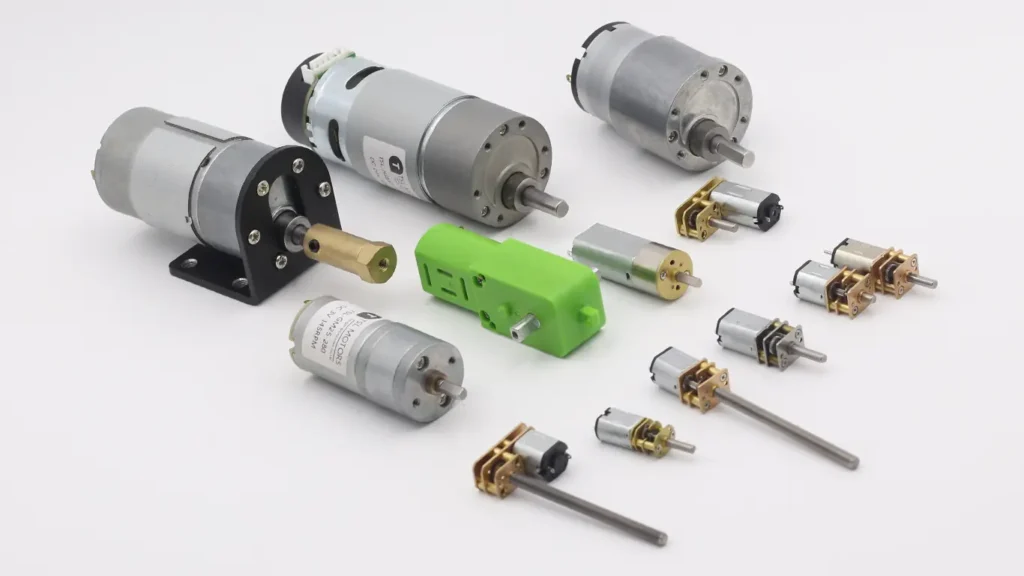
Ordinary brushed DC motors can only provide rotary power output. They cannot directly generate the linear motion needed to push the syringe piston. They must be used with extra reduction mechanisms, screw assemblies, guide structures, and mounting brackets to complete motion conversion.
This increases the overall device size. It adds assembly steps. It also raises the risk of structural loosening. During the conversion from rotary motion to linear motion, vibration and jamming may occur. This directly affects drug delivery stability and dose accuracy.
Compared with Stepper Motors
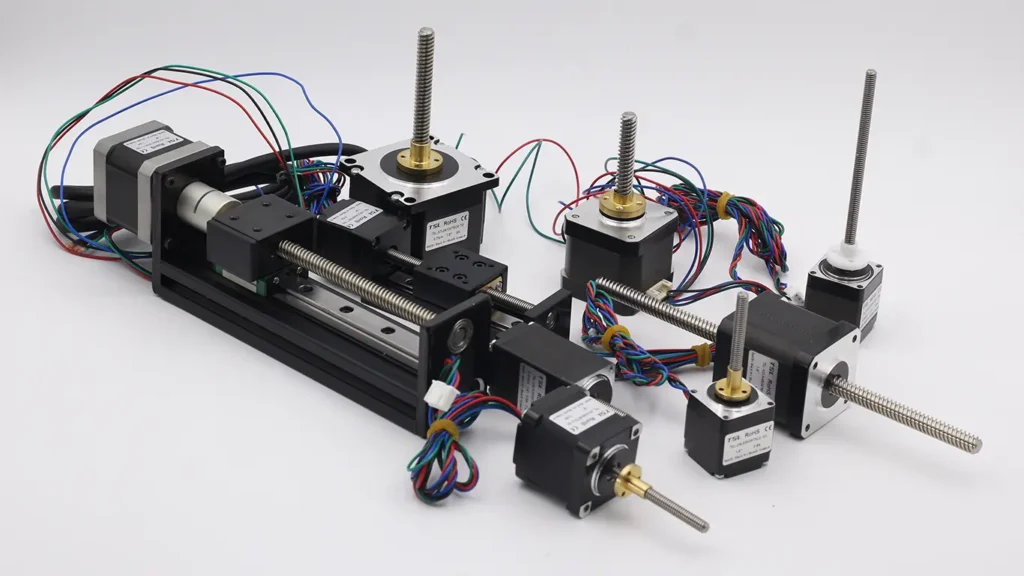
Stepper motors offer relatively high positioning accuracy. But they are large in size. They have high operating noise, high power consumption, and complex drive circuits. At low speed, they can easily produce vibration and whining noise. This does not meet the requirements of quiet home and clinical use.
Stepper motors also require special driver chips and complex control logic. This increases development difficulty and circuit cost. It is difficult to adapt them to portable, battery-powered electronic injectors.
Compared with Ordinary Gear Motors
Ordinary gear motors usually provide open-loop rotary output. They have large gear backlash and low transmission accuracy. If they are used for linear pushing, they require extra modification. This leads to large linear displacement error, poor dose consistency, and obvious thrust fluctuation. They cannot meet the high repeatability requirements of fixed-dose electronic injectors.
Ordinary gear motors also often use engineering plastic gears. Their wear resistance is poor. Long-term use may cause wear and slipping. Their service life is difficult to meet medical device standards.
Compared with Springs
Spring drives use elastic potential energy to push the piston. The structure is simple. But dosage is uncontrollable. Precision is extremely low. Elastic fatigue can occur easily. They cannot realize multi-setting adjustment or stable repeated dosing. Long-term use can cause thrust decline and dose drift. This creates significant medication safety risks.
Compared with Electromagnetic Drives
Electromagnetic drives have low thrust and abrupt response. It is difficult for them to provide smooth and constant-speed pushing. They also cannot hold position after power failure. Their applicability is very low.
In summary, the 8mm miniature coreless electric linear actuator is better than other drive solutions in key aspects. These include size, precision, noise, power consumption, reliability, integration, and mass production suitability. It is the most suitable, reliable, and mass-production-ready core drive option for multi-setting fixed-dose electronic injectors.
Overview of the PG8K256-KS0816+SG35 8mm Electric Linear Actuator
The PG8K256-KS0816+SG35 is an 8mm coreless electric linear actuator designed for multi-setting fixed-dose electronic injectors. It integrates an 8mm coreless brushed motor, an all-steel planetary gearbox, and a precision screw-nut assembly.
It provides smooth linear output, precise dose control, and very high integration. It can quickly adapt to different electronic injector control systems. Its performance fully covers all working conditions for multi-setting quantitative drug delivery.
Customization Services and Technical Support System
We provide one-stop customization services and full-cycle technical support for global medical device manufacturers. Our service covers the whole process of electronic injector development, prototyping, and mass production.
- Parameter customization: voltage, thrust, stroke, speed, and reduction ratio can be adjusted on demand.
- Structural customization: shaft-end form, mounting method, lead-wire length, and connector type can be customized.
- Transmission optimization: screw lead, gear ratio, and material combination can be matched for specific applications.
- Control adaptation: drive solutions, closed-loop control logic, host computer connection, and system integration support are available.
- Environmental reinforcement: wide-temperature, moisture-proof, low-noise, and medical-grade reliability optimization are available.
Full technical support: solution selection, structural design, prototype debugging, mass production implementation, and after-sales maintenance are supported.
Industry Trends and Future Outlook
Global precision drug delivery devices are developing rapidly toward miniaturization, intelligence, portability, and high reliability. The market for multi-setting fixed-dose electronic injectors continues to grow. Drive systems are showing the following trends:
Integrated drive and control: motors, transmission, sensors, and control are highly integrated. This further reduces size.
Closed-loop control: built-in position feedback enables higher dosing accuracy and status monitoring.
Standardized design: 8mm miniature actuators are becoming mainstream. They lower the development threshold and speed up mass production.
Global adoption: cost-effective domestic solutions are replacing imports. This helps make medical devices more accessible worldwide.
In the future, we will continue to optimize the performance of miniature coreless electric linear actuators. We will provide more precise, reliable, and intelligent drive solutions for electronic injectors.
Conclusion
The PG8K256-KS0816+SG35 8mm coreless electric linear actuator features an ultra-small size, high-precision linear output, stable thrust, low noise, low power consumption, high integration, and high reliability. It perfectly matches the core requirements of multi-setting fixed-dose electronic injectors.
It effectively solves the pain points of traditional drive solutions in miniaturization, precision, stability, and integration. It provides global medical device manufacturers with a mature, reliable, and scalable dedicated drive solution. It helps upgrade precision drug delivery technology. It also supports the global adoption of multi-setting fixed-dose electronic injectors.
FAQ
Q1:Why is an 8mm linear actuator preferred over a standard motor for electronic injectors?
Electronic injectors are typically pen-type or handheld with extremely limited internal space. The 8mm actuator integrates the motor, planetary gearbox, and lead screw into a single unit, allowing it to fit into narrow spaces without needing extra transmission parts.
Q2:How does the actuator ensure the accuracy of drug dosing?
The actuator uses a precision screw-nut assembly and an all-steel planetary gearbox to provide high-precision linear output and displacement repeatability. This ensures consistent drug delivery across multiple dose settings.
Q3:What is the noise performance in quiet clinical or home environments?
The PG8K256 is optimized for low-noise operation, maintaining levels at or below 55 dB. Its smooth, vibration-free motion meets the strict requirements for use in hospitals and homes.